Paddles
Composite and Graphite Pickleball Paddles, Compared Without the Confusion
Compare composite vs graphite pickleball paddle feel, spin, control, weight, and buying tradeoffs before choosing your next paddle.
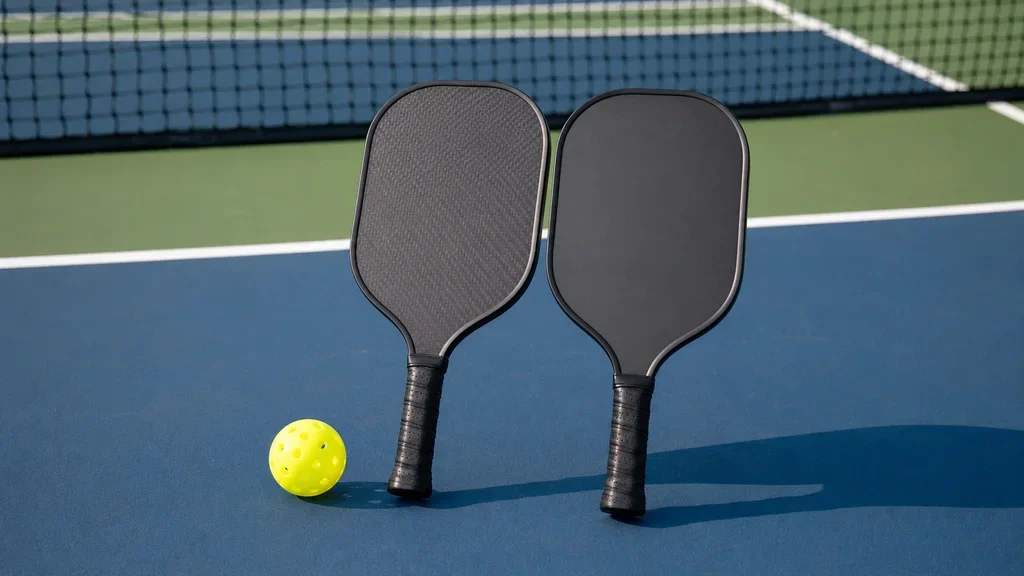
If you are stuck on the phrase composite vs graphite pickleball paddle, you are really asking how the paddle face will feel when you block, dink, drive, and reset the ball. The material matters, but it is not the only spec in the decision.
Look at face material as one clue, then check the core, thickness, weight, shape, grip size, and surface texture. That full mix tells you far more than a product label by itself.
| What you see | Likely cause | First move |
|---|---|---|
| Your drives fly long | The paddle feels too lively, too heavy, or too head-weighted | Try a softer-feeling face, thicker core, or midweight build |
| Dinks pop up under pressure | The face gives sharp feedback but not enough dwell time for your touch | Test composite or textured carbon-style faces with a controlled swing |
| Blocks feel late | The paddle may be too heavy, too elongated, or slow through the hand | Move toward a lighter swing weight before blaming the face material |
| Spin feels inconsistent | Surface texture, wear, and ball contact quality matter more than the label | Check grit, clean the face, and compare fresh paddles side by side |
Composite vs graphite pickleball paddle: quick answer
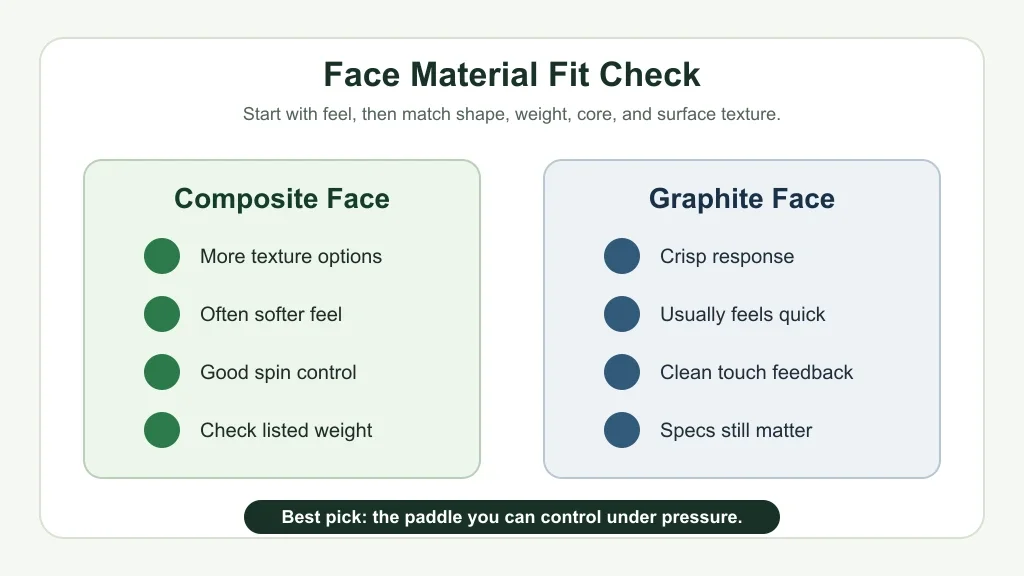
Choose a composite paddle if you want a little more grip on the ball, a softer response, and forgiveness while you learn touch shots. Choose graphite if you like a crisp, quick feel that tells you exactly where the ball met the face.
That said, modern paddles blur the old categories. A thin graphite paddle can feel lively, while a composite paddle with a thick polymer core can feel calm and controlled. The best answer is not the material alone, it is the full build.
What the face material actually changes
A paddle face is the part that contacts the ball, so it affects feedback, spin feel, and how much the ball seems to stay on the paddle. Composite faces often include fiberglass or blended layers that can feel slightly softer and more textured.
Graphite faces are usually thin and stiff. Players often describe them as clean, crisp, and easy to place, especially on blocks and drops. If you already make compact swings, that feedback can be useful.
Need more spin? Do not shop only by the word composite. Surface texture, grit durability, ball quality, and your swing path all matter. Our guide to surface grit and spin explains why two paddles with similar materials can behave very differently.
Control, power, and forgiveness
Control comes from a paddle that lets you repeat the same shot without fighting the face. For newer players, that often means a midweight paddle with a forgiving sweet spot, not the stiffest or loudest option on the rack.
Composite paddles can suit players who want a touch more pocketing on resets, dinks, and third-shot drops. Graphite paddles can suit players who want sharper feedback and easy maneuverability at the kitchen line.
Power is not guaranteed by either label. Core thickness, swing weight, and paddle shape can change the result fast. If you are chasing easier pace, compare this article with our power paddle guide for beginners before choosing a stiff face that makes your soft game harder.
Weight and shape can override material
Pick up the paddle and shadow a few quick volleys. If the head feels slow, the face material will not rescue it. A lighter graphite paddle may feel quicker than a heavy composite paddle, but a balanced composite paddle may feel steadier than both.
Most recreational players should start around a comfortable midweight and adjust from there. Players with a tennis background may also like longer handles or elongated shapes, which is why our guide to control paddles for tennis players focuses on handle, reach, and timing instead of face material alone.
Buying your first paddle? Pair this comparison with the paddle weight guide, because a good material choice still feels wrong when the paddle is too heavy for quick hands.
Who should choose composite
Composite makes sense if you want a more forgiving response, you are still developing touch, or you like to roll the ball with spin. Many beginner and intermediate players enjoy that slightly cushioned feel because it gives them time to guide the shot.
It can also be a smart choice if your current paddle feels too pingy near the kitchen. A textured composite face with a polymer core can make resets and soft blocks feel less jumpy.
Just watch for durability claims. If you play several times a week, surface texture can wear and the core can change feel. Keep the face clean with a simple paddle care routine, and check our note on how long paddles last when shots start sounding different.
Who should choose graphite
Graphite makes sense if you like a quick, precise paddle and you already control your swing length. The crisp face can help you feel mishits and make small adjustments at the line.
It can also fit doubles players who block a lot, counter quickly, and value hand speed. If your games are mostly kitchen exchanges, pair your paddle choice with smarter beginner doubles positioning and a clear understanding of pickleball kitchen rules.
Be careful if you have a long, fast swing and miss deep often. A crisp face plus too much swing can send balls sailing. In that case, a more control-focused build or a thicker core may help more than switching labels.
How to compare two paddles in a store or demo session
- Start with grip comfort. If your hand strains, the material comparison is already compromised.
- Check static weight and swing feel. Move the paddle fast at the net, then make a slow dink motion.
- Hit three soft shots first. Dinks, resets, and blocks reveal control faster than hard drives.
- Then hit controlled drives. Look for depth you can repeat, not the single hardest ball.
- Compare sound and vibration. A paddle that feels harsh in five minutes may feel worse after two hours.
If you are building a full starter setup, the paddle is only one piece. A beginner pickleball set, reliable outdoor pickleball balls, and correctly measured net height and setup make paddle testing more honest.
Common buying mistakes
Do not assume graphite always means premium or composite always means beginner. Price often reflects brand, construction, edge technology, certification, and marketing as much as face material.
Do not ignore your feet, either. Paddle control gets harder when you are sliding or reaching late. If that sounds familiar, review supportive court shoes before blaming your paddle.
Avoid buying only for the one shot you love. If you win points with resets, blocks, and patient doubles patterns, your paddle should support that whole style. For the strategy side, see beginner doubles strategy, singles and doubles scoring, and the double bounce rule.
Related gear decisions
Face material overlaps with other paddle questions. If you are choosing between modern fiber terms, read the carbon fiber or fiberglass paddle guide. If spin is your goal, compare face material with paddle traits for spin instead of shopping by one label.
Control-focused players may want the control paddle shortlist. New players who practice at home can build touch with pickleball drills at home, then carry the paddle in a simple beginner pickleball bag.
Quick Checklist
- Use material as a starting clue, not the final decision.
- Choose composite if you want softer feel, texture, and forgiveness.
- Choose graphite if you want crisp feedback and quick hand speed.
- Check weight, swing weight, grip size, and core thickness before buying.
- Test soft shots before hard drives.
- Prefer repeatable control over one impressive power shot.
- Confirm the paddle meets the rules for the events you plan to play.
Bottom line: the best paddle is the one that keeps your ordinary shots under control. Composite and graphite can both work well, but the right match depends on your swing, your touch game, and the specs around the face material.
Frequently Asked Questions
is composite or graphite better for pickleball paddles?
Neither is automatically better. Composite often feels softer and more textured, while graphite often feels crisp and quick. Pick the one that gives you better control on dinks, blocks, and resets.
do graphite pickleball paddles have more power?
Some graphite paddles feel lively, but power depends on more than the face. Core thickness, shape, swing weight, and your swing speed can matter just as much.
are composite pickleball paddles good for beginners?
Yes, many beginners like composite paddles because they can feel forgiving and easy to control. Still, a poorly weighted composite paddle can feel awkward, so test the whole paddle.
what paddle material gives the most spin?
Spin comes from surface texture, contact quality, and swing path. Composite, graphite, carbon fiber, and fiberglass faces can all spin the ball when the texture and technique are right.
how do I know if a paddle is approved for play?
Check the event requirements and the current official equipment information. Recreational games are relaxed, but tournaments can require paddles that meet published standards.
Official sources: USA Pickleball equipment standards · USA Pickleball rulebook.