Paddles
Best Control Pickleball Paddles for 2026, Without the Guesswork
Find the best pickleball paddle for control 2026 with practical tips on thickness, shape, grip, surface feel, and legal approval.
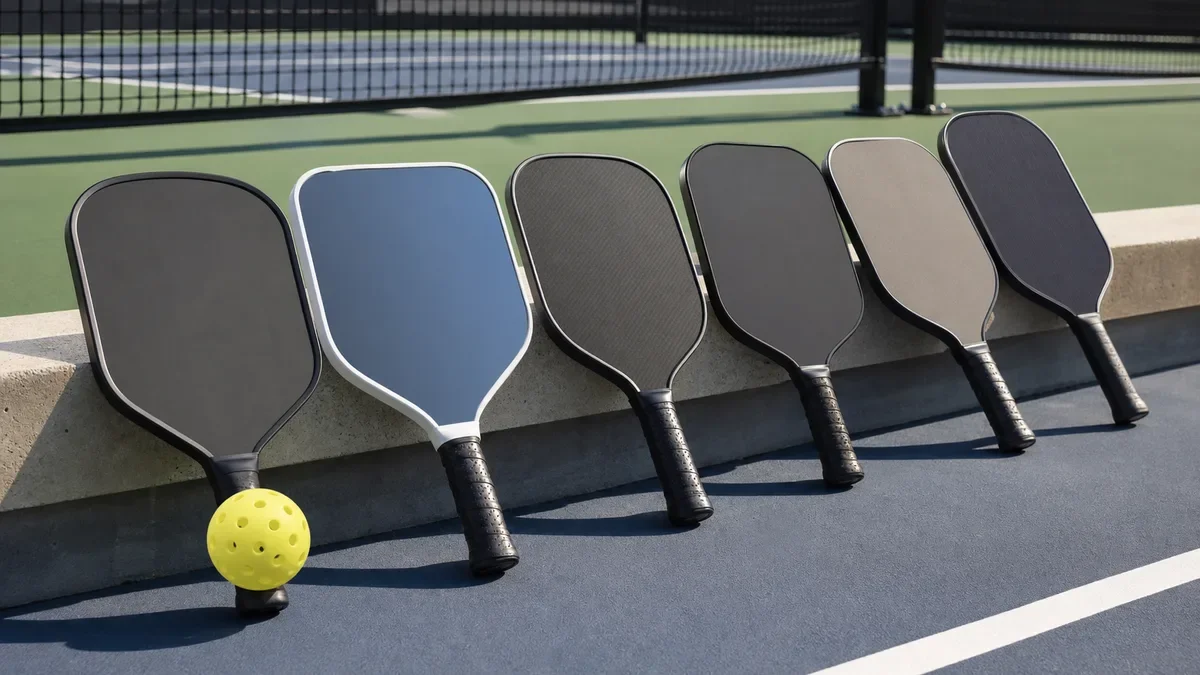
If you are searching for the best pickleball paddle for control 2026, start with one practical question: which shot are you trying to make calmer? A true control paddle should help with drops, resets, blocks, returns, and placement without feeling dead in your hand.
Buying by hype alone gets messy fast. A paddle can be expensive, legal, and popular, yet still be wrong for your swing speed, grip comfort, or the kind of mistakes you are trying to fix.
| What you see | Likely cause | First move |
|---|---|---|
| Drops keep floating high | Too much face pop or a rushed grip | Try a softer 16 mm control build |
| Blocks jump long | Sweet spot feels hot or uneven | Test a wider or hybrid shape |
| Returns lack depth control | Paddle is too light or unstable | Compare moderate swing weights |
| Spin is hard to repeat | Surface feel or contact point varies | Clean up contact before chasing grit |
| Hand gets tight during dinks | Grip size or handle shape is off | Adjust the grip before replacing the paddle |
Best pickleball paddle for control 2026: what matters first
Control is not one spec. It is the way thickness, shape, weight, surface feel, handle comfort, and your swing work together. A thick paddle with a broad sweet spot usually makes soft shots easier, but only if it still moves fast enough for your hands.
Most recreational players should begin with a 16 mm paddle, a forgiving widebody or hybrid shape, and a grip that lets the hand stay relaxed. That combination is not flashy, but it protects the shots beginners and improving players miss most often.
Use feel, not marketing words, to sort your shortlist
Ignore labels like control, all-court, and pro model until you have tested what the paddle does on simple shots. Hit five drops, five blocks, five third-shot drives, and five returns with the same ball. The best control pick should make the average ball better, not just the one perfect swing.
For most players, a control paddle should feel quiet on contact. If every block rebounds hard or every reset floats, the paddle may have more pop than you can manage right now. If it feels mushy and you cannot reach the baseline on returns, it may be too soft for your swing.
Surface texture is part of the story, but it is not the whole story. Our guide to pickleball paddle surface grit explains why spin still depends on contact quality, not just a rough-feeling face.
The safest spec range for newer control players
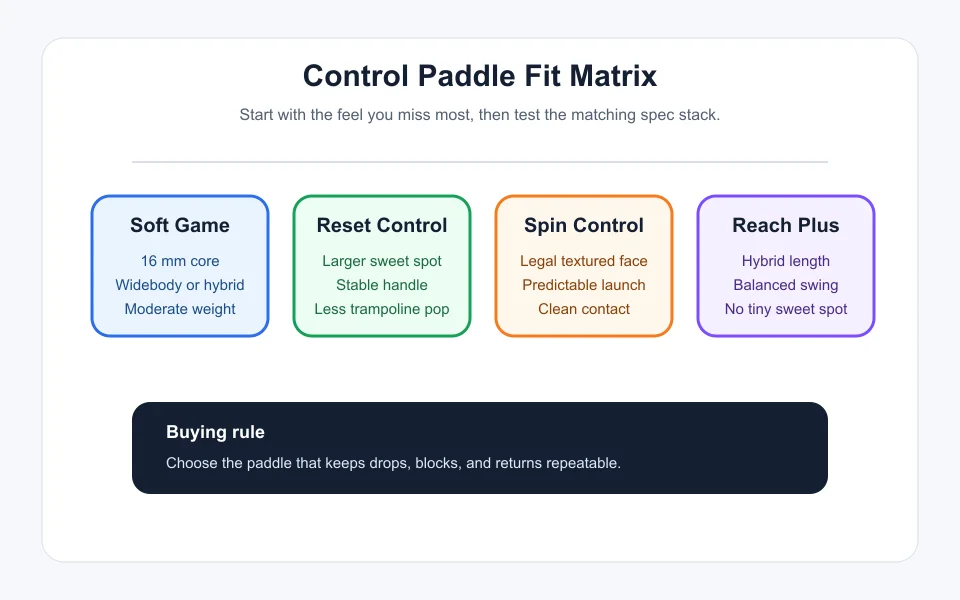
Start with a paddle in the middle of the market rather than the extremes. A very light paddle can get pushed around on blocks, while a very heavy paddle may slow your hands at the kitchen. Moderate weight gives you a better read on whether the face actually suits you.
Thickness is the next filter. A 16 mm core often softens the launch and gives you more time to place the ball. Some 14 mm paddles still control well, especially for players with compact swings, but they can feel livelier.
Shape matters more than many buyers expect. A widebody paddle can be forgiving for players who miss the center. A hybrid shape can add reach without making the sweet spot feel tiny. Use our pickleball paddle shape guide and the elongated vs standard paddle comparison if shape is your hardest choice.
How to test a control paddle before buying
Run a short test that looks like real pickleball. Start with baseline returns, then move to kitchen blocks, controlled dinks, and resets from transition. A paddle that only feels good during warmups may not hold up once the ball comes faster.
Keep the test simple. Use the same ball, the same partner, and the same targets. If you switch too many variables, you will end up judging your timing instead of the paddle.
Grip comfort deserves its own minute. If the handle makes you squeeze, your touch will disappear. Before you spend more money, compare our grip size guide and the beginner-focused paddle weight guide.
Control picks by player type
Soft-game players should favor thicker cores, stable faces, and a shape that helps them hit the center. If you live around the kitchen, consistency beats maximum spin.
Former tennis players may prefer a hybrid or slightly elongated shape because it feels natural on drives and two-handed backhands. Just be careful with extra length if the sweet spot gets too demanding.
Power-leaning beginners need the most discipline here. If you still want help finishing balls, read our power beginner paddle guide, then come back and make sure the control shots still behave. Budget shoppers can also compare the tradeoffs in our best paddle under 100 guide.
Rules and approval checks buyers should not skip
A paddle can feel great and still be a poor tournament choice if it is not approved for sanctioned play. Before buying for leagues, tournaments, or serious club events, search the USA Pickleball approved paddle list for the exact brand and model.
Also watch the surface. The 2026 rulebook bars holes, cracks, delamination, rough texturing, and sandpaper characteristics on the hitting surface. That matters for used paddles and for any paddle that has been modified after purchase.
Control players should avoid homemade texture tricks. They may seem harmless, but altered surfaces can create legality problems and inconsistent contact. For normal recreational play, clean the face and replace grips instead.
Make the paddle work with your game
Better gear helps, but control still comes from choices. If you stand too deep, rush the third shot, or swing hard at every ball, even a forgiving paddle will feel unpredictable.
Pair the paddle with a small practice plan. Use home pickleball drills for touch, then add beginner control drills on court. If basic contact still feels rushed, fix the habits in common beginner mistakes and build a steadier baseline routine with How to serve in pickleball for beginners.
For doubles, our beginner doubles strategy guide helps you place the ball with a purpose instead of just keeping it in.
Rules knowledge also cleans up decision-making. Review the double bounce rule, singles and doubles scoring, 2026 serving rules, and beginner scoring rules if game flow is stealing attention from your shots.
Other gear that changes paddle control
Balls and shoes can make a paddle feel better or worse than it is. Outdoor balls often feel harder and faster than indoor balls, so compare our indoor vs outdoor pickleball balls guide before blaming the paddle for every miss.
Footwork matters too. If your shoes slide, stick, or make you lunge late, your paddle face will open at the wrong time. The pickleball court shoes vs tennis shoes guide explains when a court-specific shoe makes sense.
Warmups are not just injury prevention. A loose wrist and steady feet make control testing fair. Use this 8-minute pickleball warm up before deciding a paddle is wrong.
How long a control paddle should stay consistent
A control paddle is worth keeping as long as the response stays predictable. Surface wear, core fatigue, edge damage, and grip breakdown can all change touch before the paddle looks ruined.
If your drops start floating and your blocks suddenly pop up with the same swing, compare the paddle with a newer one. Our guide to how long pickleball paddles last walks through the replacement signs.
Do not let one bad match make the decision. Clean the face, replace the grip if needed, and test again on a calm practice day. Most players learn more from that than from another online spec table.
Quick Checklist
- Start with a forgiving 16 mm paddle if soft shots are the problem.
- Choose widebody or hybrid shapes before chasing extreme reach.
- Test blocks, drops, returns, and resets, not only drives.
- Check the exact model on the USA Pickleball approved paddle list.
- Avoid altered or damaged surfaces if you play sanctioned events.
- Fix grip size and overgrip comfort before replacing the whole paddle.
- Use the same ball and partner when comparing two paddles.
Bottom line
The best control paddle for most recreational players is not the most expensive or the softest. It is the paddle that keeps ordinary shots repeatable under pressure.
Start with a stable 16 mm build, a forgiving shape, a comfortable grip, and legal surface construction. Then let your drops, blocks, and returns decide. That is a cleaner way to buy.
Frequently Asked Questions
what is the best pickleball paddle for control?
The best control paddle is usually a forgiving 16 mm paddle with a stable sweet spot, comfortable grip, and predictable face response. Exact brand choice depends on your swing speed, preferred shape, and whether you need tournament approval.
is a 14mm or 16mm paddle better for control?
A 16 mm paddle is often easier for control because it can soften the launch and feel more stable on blocks. A 14 mm paddle can still work if you like a quicker, livelier response.
are control pickleball paddles good for beginners?
Yes. Beginners usually benefit from a control-friendly paddle because it helps with returns, dinks, resets, and keeping the ball in play. Too much power too early can make mistakes bigger.
do control paddles have less power?
Some do, but not all. Many control paddles trade a little easy pop for better placement and touch. A balanced control paddle should still give enough depth on serves and returns.
how do i know if a pickleball paddle is legal?
Search for the exact brand and model on the USA Pickleball approved paddle list. Also avoid cracked, delaminated, heavily altered, or sandpaper-like surfaces if you play sanctioned events.
Official sources: USA Pickleball rules and equipment standards · USA Pickleball approved paddle list.