Training
Pickleball Warm Up Exercises for Beginners: An 8-Minute Court Routine
Pickleball warm up exercises for beginners in an 8-minute routine for feet, hips, shoulders, dinks, volleys, and first rallies.
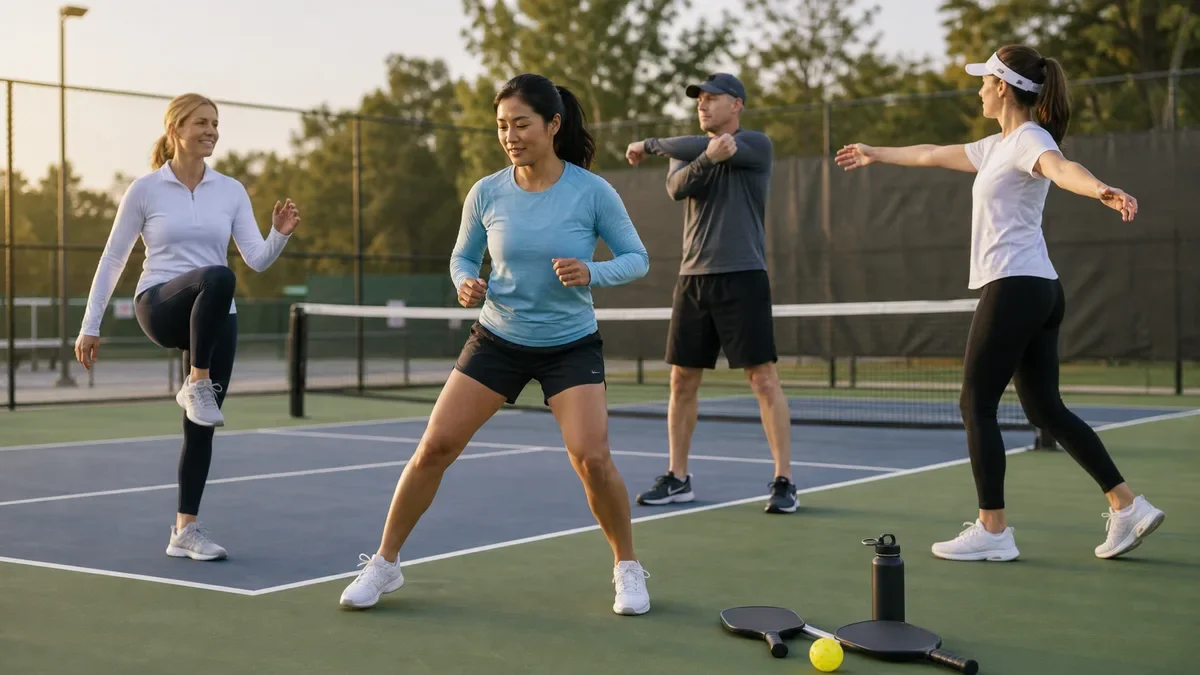
A useful set of pickleball warm up exercises for beginners should be short enough to do before open play and specific enough to prepare your feet, hips, shoulders, and paddle touch. You do not need a gym routine at the court.
Most beginners skip the warm-up because they want to start hitting. Fair. But the first few points often expose cold feet, tight shoulders, and late reactions, which makes the game feel harder than it needs to be.
| What you see | Likely cause | First move |
|---|---|---|
| You miss easy balls early | Your eyes and paddle touch are not ready | Start with soft dinks and volleys |
| Your feet feel stuck | No pulse or lateral movement first | Add marching, shuffles, and split steps |
| Your shoulder feels tight | You start serving too hard too soon | Use arm circles and soft overhead motion |
| You feel winded after one rally | The warm-up was too static | Raise your heart rate gradually |
What you need
You need a paddle, a ball, court shoes if you have them, water, and a small patch of court space. A partner helps, but you can do most of this routine alone against a fence or with shadow swings.
If you are still playing in running shoes, read about court shoes for pickleball. Warm feet are good, but stable feet matter when you start moving side to side.
Step 1: Raise your pulse for 90 seconds
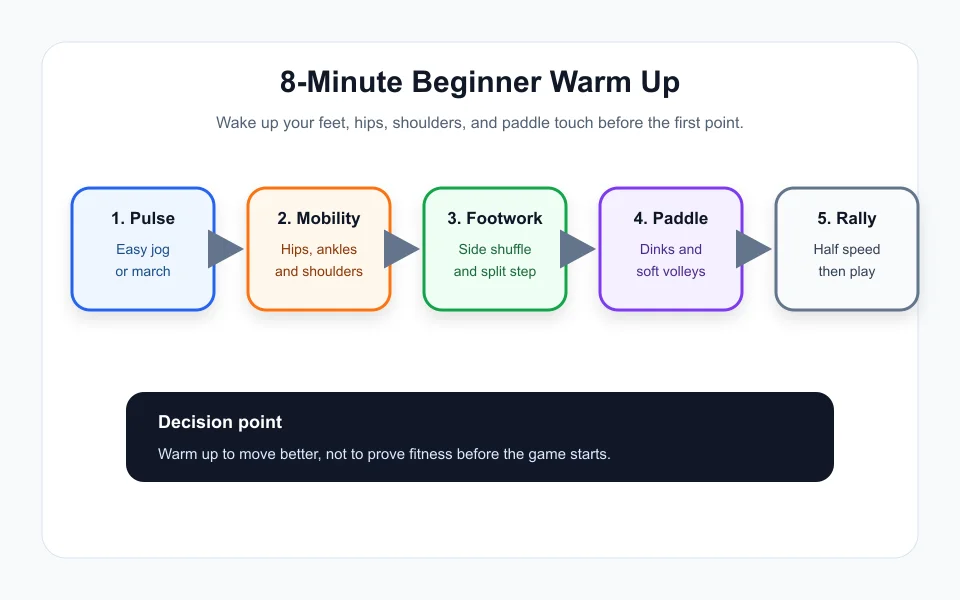
Start with easy marching, light jogging in place, or a slow lap around the court. Keep it conversational. The goal is to feel warmer, not tired.
Add gentle arm swings as you move. Pickleball is not only legs. Your shoulder, elbow, wrist, and grip all need a few moments before serves and volleys feel natural.
This first block pairs well with pickleball drills for beginners because both reward control before power.
Step 2: Loosen ankles, hips, and shoulders
Spend about two minutes on dynamic mobility. Do ankle circles, hip circles, gentle torso turns, arm circles, and a few slow paddle swings. Keep each movement smooth.
Beginners often stretch by standing still and pulling on a muscle. Save the long holds for later. Before play, moving through comfortable ranges usually prepares the body better for quick reactions.
Add a few short forward and backward steps. Pickleball asks you to stop, restart, and adjust. Your warm-up should include that rhythm before the first serve.
Step 3: Practice court footwork for two minutes
Move side to side along the kitchen line with small shuffles. Then add a split step, shuffle, touch the line with your paddle, and recover. Stay low enough to move, but do not force a squat.
Beginners need this because the ball rarely arrives exactly where the paddle is. Better footwork means cleaner contact, fewer reaches, and fewer wild swings.
Knowing pickleball scoring rules for beginners helps once play starts, but footwork helps before the score even matters.
Step 4: Wake up paddle touch
Hit soft dinks for one minute. Keep the paddle face quiet and aim over the net with plenty of margin. Then hit easy volleys at half speed.
Do not start with full serves or hard drives. Cold contact encourages big swings and late corrections. A few soft shots teach your hands where the paddle face is today.
If the paddle feels heavy or hard to control, it may be worth learning how to choose pickleball paddle weight before blaming your technique.
Step 5: Rally before playing points
Finish with one or two half-speed rallies. Aim for ten cooperative shots in a row. You are not warming up to beat your partner. You are warming up to start the match with better timing.
After that, serve a few easy balls and begin. If your body still feels cold, make the first game casual and build speed gradually.
Quick Checklist
- Start with 90 seconds of easy movement.
- Use dynamic mobility for ankles, hips, shoulders, and trunk.
- Practice side shuffles and split steps before the first point.
- Hit soft dinks before hard drives or serves.
- Take half-speed rallies seriously.
- Stop if a movement causes sharp pain.
- Use stable court shoes when possible.
Bottom Line
The best pickleball warm up exercises for beginners are simple, repeatable, and court-friendly. Give yourself eight minutes, move before you swing hard, and your first game usually feels cleaner.
Frequently Asked Questions
how should beginners warm up for pickleball
Beginners should start with easy movement, add dynamic mobility, practice short court footwork, hit soft dinks and volleys, then rally at half speed before playing points.
how long should a pickleball warm up be
Five to ten minutes is enough for many recreational beginners. Take longer if you feel stiff, are returning from a break, or plan to play several games.
should you stretch before pickleball
Use gentle dynamic movement before play rather than long static holds. Save deeper static stretching for after play or another mobility session.
what muscles should i warm up for pickleball
Focus on calves, ankles, hips, glutes, shoulders, forearms, and core because pickleball uses quick stops, side steps, reaches, and repeated paddle contact.
can a warm up prevent pickleball injuries
A warm-up can reduce stiffness and improve readiness, but it cannot guarantee injury prevention. Stop if pain appears and get medical guidance when needed.
Official sources: Mayo Clinic: Stretching and exercise basics · Pickleball.com warm-up routine. Check current program pages before applying.