Paddles
What Pickleball Paddle Surface Grit Means for Spin and Control
Pickleball paddle surface grit explained: what it does for spin, how fast it wears, legal limits, and what beginners should check.
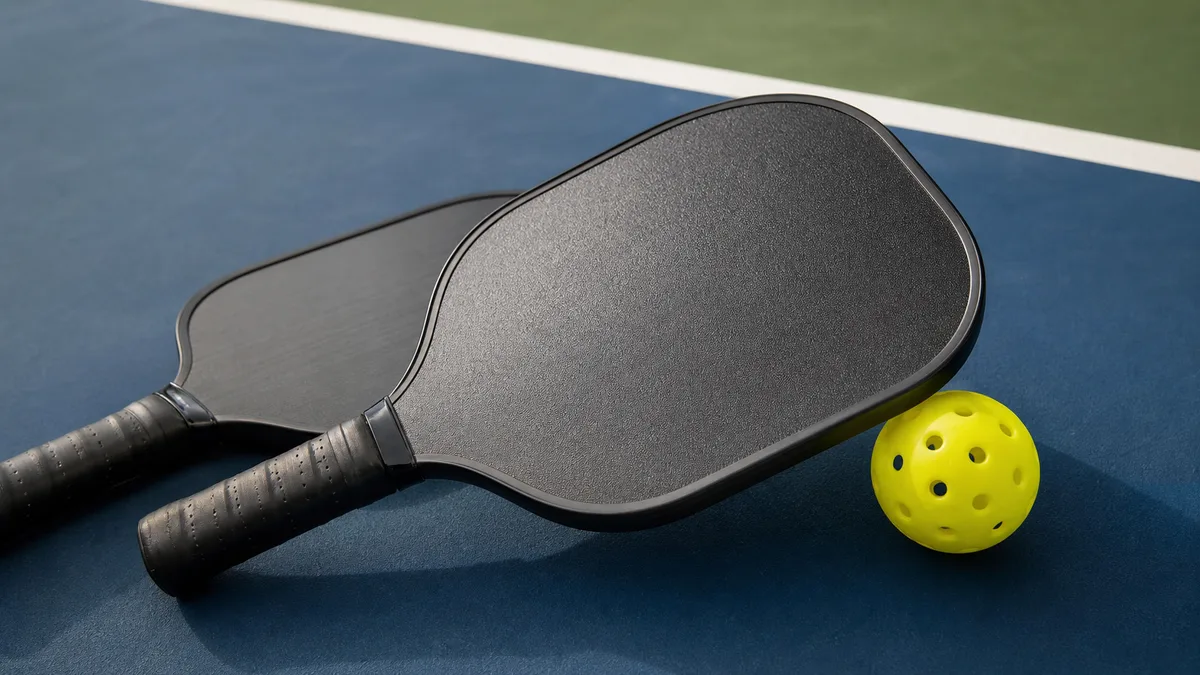
Pickleball paddle surface grit explained sounds like a lab topic, but it shows up in a very normal buying decision: will a rougher paddle face help you spin the ball, or are you just paying for a texture that wears down? The useful answer is that grit can matter, but only when the rest of the paddle and your swing support it.
Start with what you are trying to fix. If your serves, rolls, and topspin drops already have clean brush contact, face texture can add bite. If your misses come from late contact, a tiny sweet spot, or a paddle that feels too hot, surface grit is probably not the first spec to chase.
| What you see | Likely cause | First move |
|---|---|---|
| Topspin rolls dive nicely, then fade after months | The surface texture may be wearing smooth | Compare durable raw-carbon style faces before rebuying |
| The paddle feels rough but balls still fly long | Core pop or poor face angle is overpowering spin | Review graphite versus fiberglass paddle faces |
| You get spin on drives but not dinks | Contact path changes on soft shots | Use beginner control drills with the same ball |
| The paddle is very gritty but not approved | The surface may exceed legal texture or friction limits | Check the official approved paddle list before league play |
| Your hand battles feel slow | Swing weight matters more than surface bite | Compare lightweight versus heavyweight paddles |
Pickleball paddle surface grit explained: the quick version
Surface grit is the texture on the hitting face that increases friction between the paddle and the ball. More friction can help the ball grab the face for a split second, which can support topspin, slice, and shaped serves.
Here is the catch. The paddle still has to be legal, the ball still has to meet the face at the right angle, and your swing still has to brush through contact. A rough face cannot rescue a flat swing.
What grit actually changes on court
Think of grit as a helper, not a skill. It can make a good roll easier to repeat because the ball slips less at contact. That matters most on shots where you are already brushing up or across the back of the ball.
The simplest pickleball paddle surface grit explained test is a roll volley. Hit ten slow roll volleys with a smooth beginner paddle, then ten with a textured control paddle. If your path is clean, the textured paddle should make the ball dip sooner without needing a harder swing.
Misses tell you more than winners. If the rougher paddle gives you spin but also sends blocks deep, you may need a thicker core, lower swing weight, or a wider shape. Our beginner paddle weight guide and paddle weight checklist are better next reads than another grit comparison.
Raw carbon, sprayed grit, and painted texture
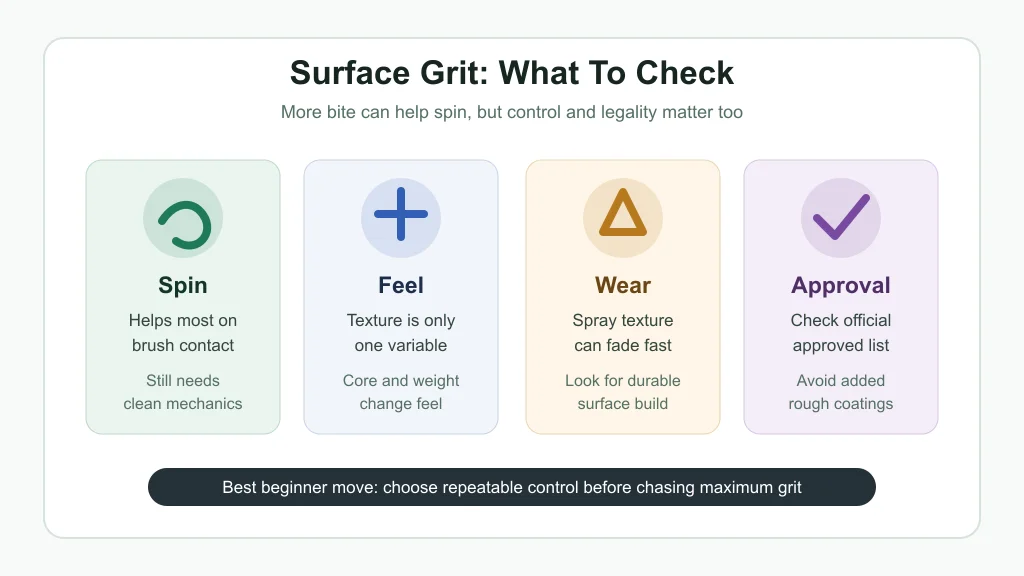
Most buyer confusion comes from the way brands describe surfaces. Raw carbon fiber, peel-ply texture, sprayed grit, fiberglass, graphite, and hybrid faces can all feel different in the hand. They do not all age the same way.
Sprayed or painted texture can feel impressive out of the box, then smooth out as the high spots wear. A woven or peel-ply carbon face may keep a more consistent feel longer, though the exact result depends on the model and manufacturing quality.
A practical pickleball paddle surface grit explained shortcut is to ask one question: does this surface help the shot you actually hit most? A spin-heavy singles player may value bite. A newer doubles player may get more from a forgiving face and a calmer reset game.
How legality works without getting lost in specs
USA Pickleball equipment standards say a paddle face cannot include holes, indentations, rough texturing, or features that let a player create excessive spin. The manual also lists lab-style roughness and friction measurements, including average Rz and Rt limits for the face.
You do not need to carry those numbers to open play. You do need to avoid mystery paddles, aftermarket rough coatings, sandpaper-like surfaces, and altered faces that change the approved hitting surface. For tournament or league play, check the model on the official approved paddle list.
Rules context matters for beginners too. If you are still sorting out serves and scoring, pair this guide with pickleball serving rules and scoring basics.
When beginners should care about surface bite
New players should care, but not first. A beginner who cannot control depth will usually improve faster with a stable paddle, a comfortable grip, and a forgiving sweet spot than with the grittiest legal face.
Choose texture earlier if you already come from tennis, table tennis, or another racket sport and naturally brush the ball. In that case, compare surface feel with our paddle guide for tennis players, paddle shape guide, and elongated versus standard paddle comparison.
For most first-time buyers, start with the best beginner paddle guide or a realistic paddle under 100 dollars. If power is your goal, read the power beginner paddle guide before assuming more grit means more pace.
How to test a paddle face before buying
Borrow, demo, or at least compare paddles side by side. Hit ten serves, ten topspin rolls, ten dinks, ten blocks, and ten third-shot drops. Keep the same ball if you can, because indoor and outdoor pickleball balls change how much grip you feel.
Use pickleball paddle surface grit explained as a buying filter, not a promise. If the paddle only shines when you swing hard, it may be too demanding for rec doubles. If it gives you controlled shape on slow shots, that is more valuable.
Footwork changes the test too. Slipping or reaching late can make any face feel inconsistent, so check pickleball court shoes versus tennis shoes, stable court shoes for seniors, or wide pickleball shoes if balance is part of the problem.
Practice makes grit easier to feel
Texture is easiest to judge when your routine is repeatable. Warm up first, then compare paddles on the same drills. Our 8-minute warm up, beginner serving routine, and beginner mistakes guide give you a cleaner baseline.
Grip size also changes paddle-face control. If you squeeze too hard or cannot adjust the face quickly, the texture may feel less useful than it really is. Use the paddle grip size guide before blaming the surface.
Quick Checklist
- Check whether the paddle is on the official approved list if you play organized events.
- Use surface grit to support spin, not replace clean brushing contact.
- Compare face texture with core thickness, shape, swing weight, and grip size.
- Avoid aftermarket rough coatings or sandpaper-like changes to the hitting face.
- Demo with serves, rolls, dinks, blocks, and drops, not only hard drives.
- Watch for texture wear if the paddle uses sprayed or painted grit.
- Choose control first if you are still missing depth and resets.
So, with pickleball paddle surface grit explained in plain terms, the smart move is simple: buy enough surface bite to shape the ball, but do not ignore the specs that decide whether you can control it. Grit is useful. It is not magic.
Official sources: USA Pickleball equipment standards manual · USA Pickleball rulebook.
Frequently Asked Questions
what is paddle grit in pickleball?
Paddle grit is the texture on the hitting surface. It can increase friction at contact, which can help spin when your swing path brushes the ball cleanly.
does more grit mean more spin in pickleball?
More grit can help, but it does not guarantee more spin. Contact angle, swing path, ball type, paddle core, and face material all affect the result.
is a gritty pickleball paddle legal?
A gritty paddle can be legal if the approved model meets USA Pickleball equipment standards. Added rough coatings or sandpaper-like alterations can create problems, so check the approved model before competition.
does pickleball paddle surface grit wear out?
Yes, some surface textures wear smoother with play. Sprayed grit often feels different after months of use, while some textured carbon faces may hold their feel longer.
should beginners buy a paddle with more grit?
Beginners should choose control, comfort, and forgiveness first. Surface bite becomes more useful once you can repeat contact and want to shape serves, rolls, and drops.