Paddles
How Beginners Should Pick the Right Pickleball Paddle Weight
Use this pickleball paddle weight guide beginners can trust to choose a comfortable first paddle for control and arm comfort.
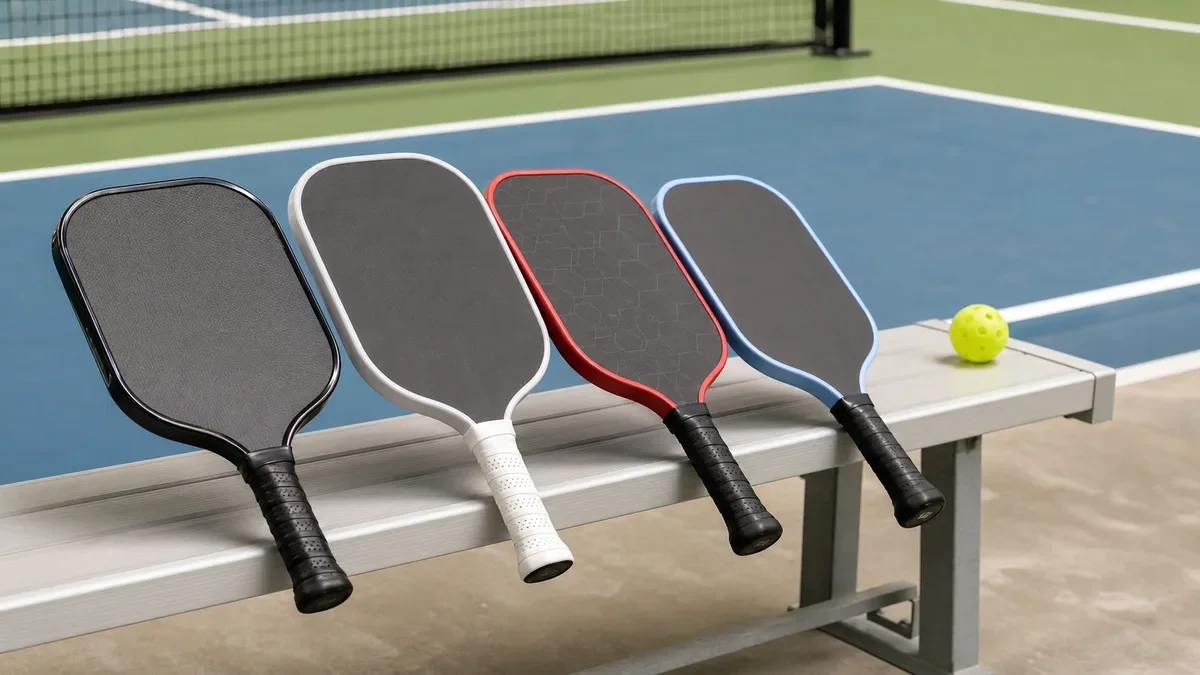
If you searched for pickleball paddle weight guide beginners, the short answer is simple: start near the middle, then adjust for comfort, control, and how your arm feels after a full session. Paddle weight is not just a spec on a product page. It changes how quickly you get the paddle up, how stable it feels against faster balls, and whether your wrist or elbow starts complaining after game three.
Most new players are better served by a balanced midweight paddle than by chasing the lightest or heaviest option they can find. Treat weight as one part of fit, alongside grip size, paddle shape, surface feel, and your current swing habits.
| What you see | Likely cause | First move |
|---|---|---|
| Your volleys feel late | The paddle may be too heavy or too head-heavy | Try a lighter swing feel before changing your stroke |
| Blocks twist in your hand | The paddle may be too light, too narrow, or poorly gripped | Check grip size, then compare a midweight paddle |
| Your arm tires fast | Static weight, balance, or grip tension may be too much | Relax your grip and test a lighter setup |
| Your shots pop long | The paddle may have too much power for your control level | Choose control and touch before extra mass |
| You miss the sweet spot often | Weight is not the only problem | Compare shape, face width, and practice contact drills |
pickleball paddle weight guide beginners can actually use
Think in three rough lanes. Lightweight paddles usually feel quick in hand, midweight paddles give the broadest balance of control and stability, and heavier paddles can add plow-through for players who already make clean contact. Those labels vary by brand, so do not buy from the label alone.
For many beginners, a paddle around the middle of the market feels easiest to learn with because it is quick enough at the kitchen but stable enough when the ball comes hard. If you have a history of wrist, elbow, or shoulder irritation, lean lighter and prioritize comfort over extra pop.
That is why a paddle can look perfect on paper and still feel awkward after ten minutes. Static weight matters, but balance and swing weight decide how heavy the paddle feels while you move it.
How weight changes control, power, and arm comfort
Lighter paddles are easier to maneuver on quick exchanges, resets, and defensive blocks. They can also make it easier to learn compact movement because you are not fighting the paddle through every adjustment.
Go too light, though, and beginners sometimes overswing. A paddle that feels featherlight in the store can twist against harder drives or make you work harder to send the ball deep.
Heavier paddles can feel more solid through contact. They may help players who already swing smoothly, especially from the baseline, but they can punish late reactions and tight grip pressure.
Midweight is the practical starting point. It gives you enough feedback to learn touch shots while still feeling steady during blocks, serves, and returns.
Start with your body, not the marketing copy
Grip a paddle for five minutes and your body will tell you more than a spec chart. If you tense your fingers, raise your shoulder, or start flicking with your wrist because the paddle feels slow, the fit is off.
Beginners often blame technique when the real problem is a mismatch. A tennis player with a long swing may like a little more mass, while a new recreational player who plays mostly doubles may prefer faster hands at the kitchen.
Also watch how tightly you grip. A handle that is too small can make you squeeze, which makes any paddle feel harsher. Use a pickleball paddle grip size check before blaming weight alone.
Light, midweight, or heavy: who should choose what?
Choose lightweight if you value quick hands, have arm sensitivity, play shorter reaction points, or are still learning compact swings. The tradeoff is that you may need cleaner contact and better timing to keep the paddle stable.
Choose midweight if you want the safest first paddle range. It is the best default for most new players because it avoids the extremes and lets you learn what you actually like.
Choose heavier only if the paddle still feels easy to move late in a session. If you are already late on volleys or your elbow feels warm after games, extra weight is not a shortcut.
For a deeper side-by-side, compare the tradeoffs in our lightweight vs heavyweight pickleball paddle guide. If you are shopping on a budget, our best pickleball paddle under 100 guide explains what to check before a low price becomes an expensive mistake.
Do not separate weight from paddle shape and surface
A widebody paddle can feel forgiving because the face gives you more room to miss the center. An elongated paddle can add reach and leverage, but the extra length may feel slower in quick hands if the balance is not right.
That shape choice can change how weight feels. A midweight elongated paddle may feel heavier in motion than a slightly heavier widebody paddle with a lower balance point.
Start with our pickleball paddle shape guide if you are stuck between widebody, hybrid, and elongated designs. For the common reach-versus-control decision, read elongated or standard pickleball paddle before you buy.
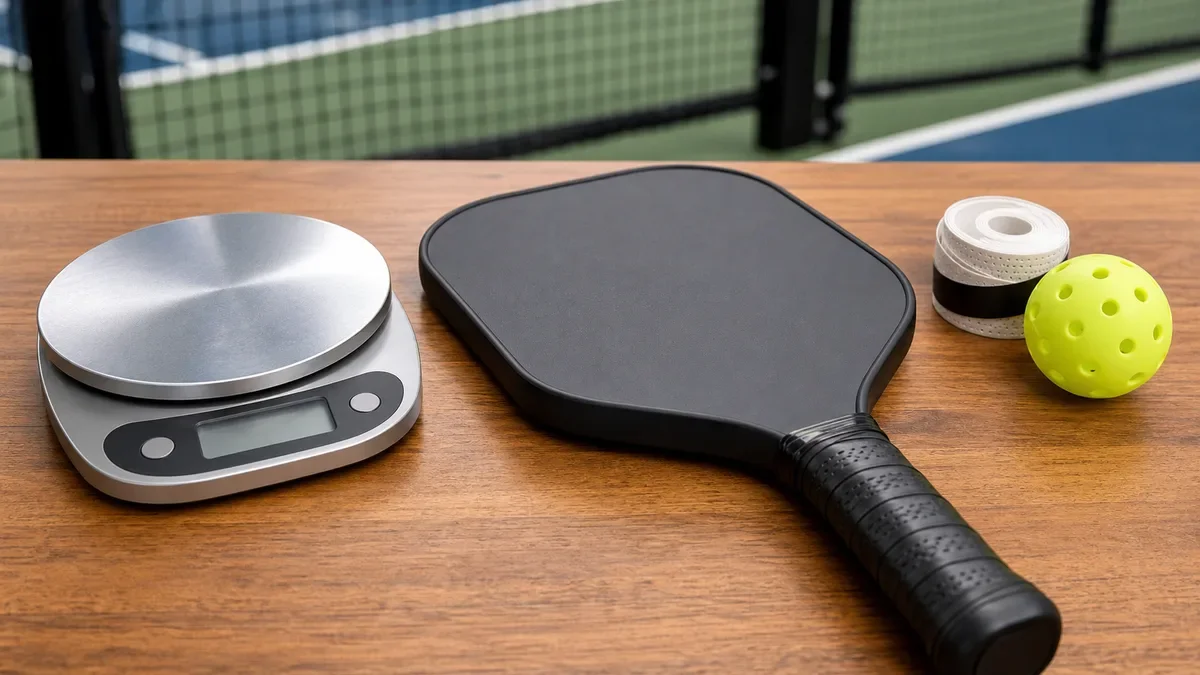
Surface material matters too. A paddle face with more pop can make a heavier setup feel lively, while a control-oriented face can make the same weight feel calmer. Our graphite vs fiberglass pickleball paddle comparison covers that feel difference in plain language.
How to test paddle weight before buying
Do not judge a paddle by one serve or one hard drive. Run through the shots beginners actually hit: a soft dink, a block volley, a serve, a return, a reset, and a few shoulder-height balls.
Notice three things. Can you get the paddle up on time? Does the face stay stable when you block? Does your arm still feel normal after a few games?
If you are comparing two paddles, test them in alternating mini-rounds instead of playing one for an hour and the other while tired. Small differences become easier to feel when you switch back and forth.
Players who want more pace should read best pickleball paddle for power beginners before choosing a heavy paddle only for power. New players who want a broad shortlist can start with best pickleball paddle for beginners.
Weight will not fix beginner fundamentals
A better paddle can make learning easier, but it will not fix a late split step, a huge backswing, or a grip that changes every shot. Gear helps most when your basic movement and contact are improving at the same time.
If your paddle feels slow, also check your feet. Poor footwear makes you late, and late players often blame the paddle. Our pickleball court shoes vs tennis shoes guide explains the stability difference, while do you need special shoes for pickleball covers the beginner safety angle.
Seniors or players with foot comfort issues should also compare pickleball shoes for seniors and pickleball shoes for wide feet. Better balance often makes any paddle feel easier to control.
For skill work, use pickleball warm up exercises for beginners, then add pickleball drills for beginners. If serves and early points are the problem, pair your paddle testing with how to serve in pickleball for beginners.
Quick Checklist
- Start with a midweight paddle unless your arm comfort says otherwise.
- Test quick volleys, blocks, serves, returns, and resets before judging feel.
- Check grip size because squeezing can make any paddle feel worse.
- Compare balance and swing feel, not just the listed ounce weight.
- Choose lighter if your wrist, elbow, or shoulder gets tired quickly.
- Choose heavier only if you stay on time late in games.
- Match weight with shape, surface, and your actual playing style.
Official Sources Checked
Equipment and rule context was checked against USA Pickleball rules and equipment standards and the USA Pickleball Equipment Standards Manual. These sources explain official paddle approval context; brands still publish their own weight ranges for specific models.
Bottom line: beginners should not chase the most powerful paddle or the lightest paddle by default. Pick a weight that lets you stay relaxed, react on time, and repeat clean contact. Once those pieces are in place, the right upgrade becomes much easier to spot.
Keep the rest of your beginner learning connected. Our guide to choosing paddle weight without guessing is a useful companion, and pickleball beginner mistakes can help you separate gear problems from habit problems. For ball choice and setup, see indoor vs outdoor pickleball balls. For rules that affect new players on court, review pickleball serving rules and pickleball scoring rules for beginners.
Frequently Asked Questions
what weight pickleball paddle should a beginner use?
Most beginners should start with a midweight paddle because it balances quick hands, stability, and control. Go lighter if you have arm sensitivity or feel late on volleys.
is a lighter pickleball paddle better for beginners?
A lighter paddle can be better if you need faster reactions or have wrist, elbow, or shoulder discomfort. It is not automatically better, though, because very light paddles can feel less stable on blocks.
is a heavier pickleball paddle more powerful?
Often, yes. More mass can add depth and stability when you make clean contact. Beginners should be careful because a heavier paddle can also make late swings and arm fatigue worse.
how do I know if my pickleball paddle is too heavy?
Your paddle may be too heavy if you are late at the kitchen, your arm tires faster than usual, or you start gripping tightly to control the face. Test a lighter or better-balanced paddle before changing everything else.
does pickleball paddle weight affect tennis elbow?
Paddle weight can affect comfort, but it is only one factor. Grip size, balance, technique, overuse, and prior injury all matter. If pain persists, stop playing and get qualified medical advice.
what is more important, paddle weight or grip size?
Both matter. Grip size affects how tightly you hold the paddle, while weight affects speed and stability. Check grip size first, then compare paddle weight so you are not solving the wrong problem.