Paddles
Elongated or Standard Pickleball Paddle: Which Shape Fits Your Game?
Compare elongated vs standard pickleball paddle shapes for reach, sweet spot, control, handle feel, and beginner buying advice.
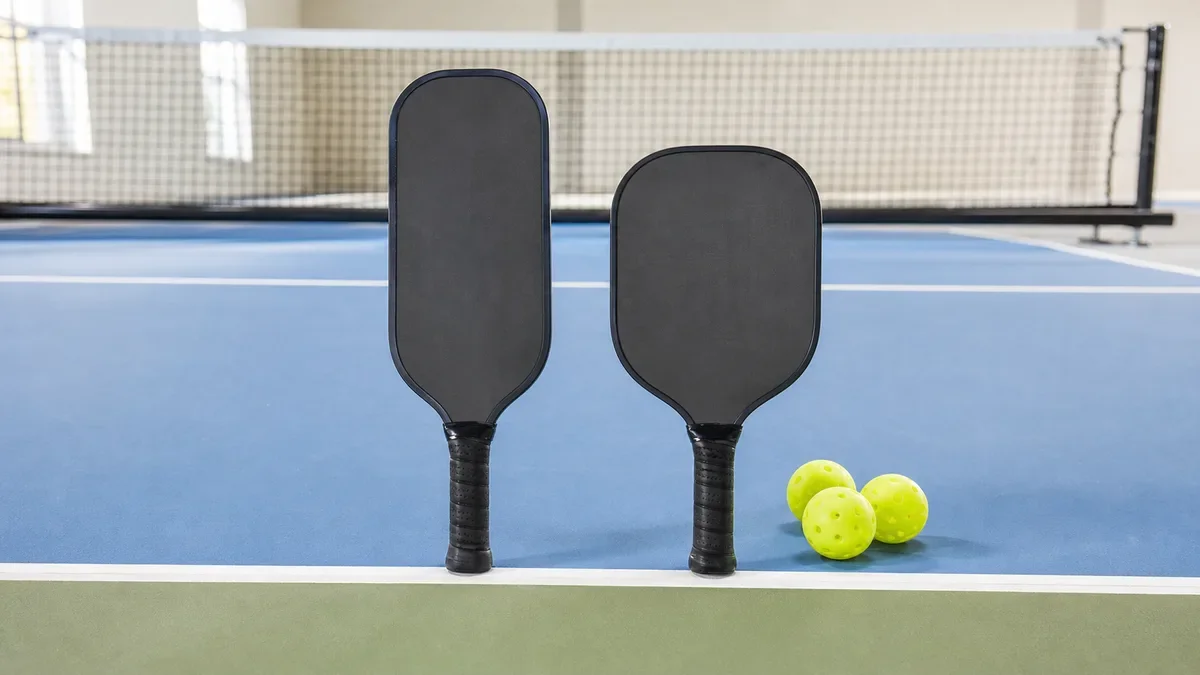
If you are comparing an elongated vs standard pickleball paddle, you are really deciding how much reach you want to trade for easy control. Paddle shape changes sweet spot location, swing feel, contact confidence, and sometimes handle length, so it is worth choosing deliberately instead of buying the shape that looks fastest.
Start with your misses. A player who keeps reaching late for volleys may like an elongated profile, while a player who mishits soft shots at the kitchen usually gets more comfort from a standard or widebody shape.
| What you see | Likely cause | First move |
|---|---|---|
| Frequent edge hits on dinks | Sweet spot feels too narrow | Try a standard or hybrid shape first |
| Late contact on volleys | You need a little more reach | Test an elongated paddle with a stable weight |
| Wrist or forearm fatigue | Swing weight may be too high | Compare shape and paddle weight together |
| Good drives, shaky drops | Power is outrunning touch | Use a wider sweet spot or a softer core feel |
| Two-handed backhand feels cramped | Handle may be too short | Look at elongated or tennis-style handles |
Elongated vs standard pickleball paddle: the fast answer
Choose an elongated paddle if you want extra reach, a longer handle, and a little more drive potential. Choose a standard paddle if you want a bigger-feeling sweet spot, easier blocks, and a friendlier first paddle for kitchen play.
Most elongated paddles run closer to the maximum legal length, while standard shapes are shorter and wider. USA Pickleball equipment standards cap paddle length at 17 inches and also limit total length plus width, so brands shift material around rather than making one shape better in every way.
What changes when the paddle gets longer?
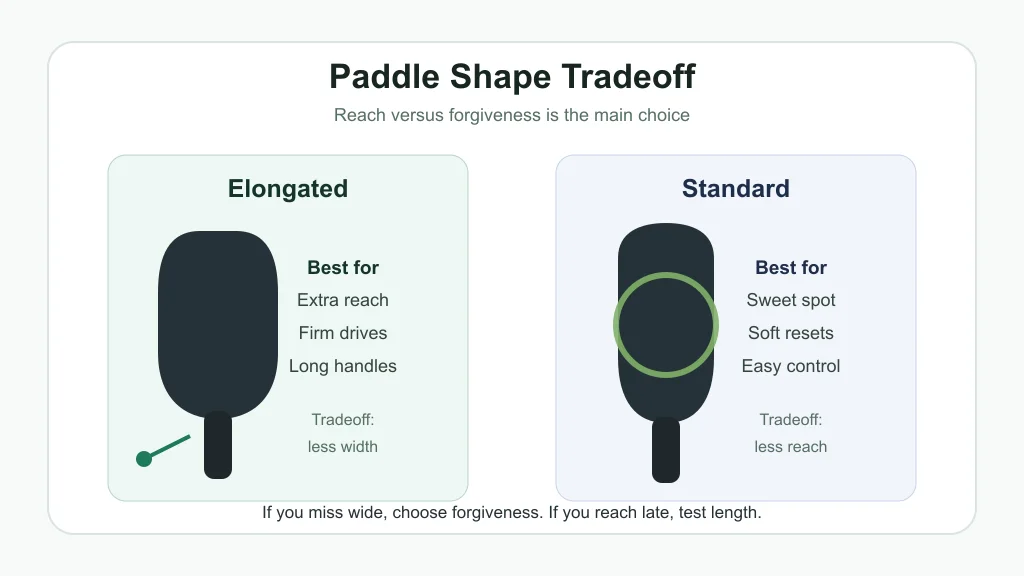
Length gives you a touch more court coverage. That can help on low volleys, stretched backhands, and balls that land just outside your comfortable reach.
But the tradeoff is real. A longer, narrower face often gives you less margin across the width of the paddle, so off-center dinks and panic blocks can punish you faster. That is why the elongated vs standard pickleball paddle choice often comes down to whether you value reach or forgiveness more.
Players coming from tennis may feel at home with a longer handle and a more familiar swing path. If that sounds like you, compare this shape decision with our guide to paddles for tennis players before you buy.
Why standard shapes still make sense
Standard and widebody paddles are not beginner-only tools. They simply put more face width in front of the ball, which makes soft contact easier when your footwork is still catching up.
Think about third-shot drops, resets, and kitchen dinks. Those shots reward clean contact more than extra reach. A wider paddle can make the game feel calmer, especially if you are still learning beginner control drills and trying to keep the ball down.
Reach, sweet spot, and swing weight
Reach is easy to understand. Swing weight is the part people skip. A paddle can weigh the same on a scale but feel slower if more mass sits toward the tip.
That is why some elongated paddles feel powerful but a little late in quick hand battles. Standard paddles can feel easier to square up because the mass sits closer to your hand, even when the listed weight looks similar.
For the cleanest test, compare the elongated vs standard pickleball paddle option inside the same brand line when possible. Same core, same face, similar grip, different shape. That removes a lot of noise.
Beginner buying advice by playing style
Pick the longer shape if you already make solid contact and mostly want help reaching wider balls. Pick the standard shape if your misses are scattered across the paddle face or you are still learning resets.
Control-first players should also look at graphite versus fiberglass paddle faces, because face material changes the feedback you feel at contact. If your current paddle pops the ball long, shape alone may not solve it.
Power-focused players should compare lightweight versus heavyweight paddles before assuming elongated means better. Extra length can add drive, but a paddle that feels slow in your hand will cost you points at the kitchen.
Fit details that matter more than the outline
Grip size is the quiet deal-breaker. Too small and you may squeeze harder than needed. Too large and it gets harder to adjust the paddle face quickly.
Use our paddle grip size guide before judging a shape. A standard paddle with the wrong grip can feel worse than an elongated paddle that fits your hand, and the reverse is also true.
Thickness matters too. A thicker core usually feels more controlled and muted, while a thinner core often feels poppier. If you are stuck after choosing shape, compare 14mm versus 16mm paddle thickness.
Try this simple court test
Borrow or demo both shapes for fifteen minutes each. Hit ten dinks, ten third-shot drops, ten serves, ten drives, and ten reaction volleys. Do not only ask which one feels exciting. Ask which one misses better.
Then switch balls and shoes into the equation. The bounce from indoor and outdoor balls can make the same paddle feel different, and poor footwear can make any paddle feel late. If you are still wearing runners, read about court shoes versus running shoes.
Older recreational players should put balance first. A shape with a little less reach but more control often pairs better with stable pickleball shoes for seniors, and players who need more toe room should check wide court shoes.
Rules context for paddle shape
Legal paddle shape is not unlimited. USA Pickleball standards set maximum dimensions, and paddles for sanctioned play should appear on the official approved paddle list.
For casual play, that mainly means you should avoid unknown paddles with odd dimensions or questionable surfaces. For league or tournament play, check the model by brand and name before you show up, then keep your gear choices boring in the best way.
Gear is only part of legal play. If you are new, pair this paddle choice with a refresh on serving rules and scoring basics.
Quick Checklist
- Choose elongated if reach and longer-handle comfort matter most.
- Choose standard if a wider sweet spot and easier resets matter most.
- Compare swing weight, not only the weight printed on the spec sheet.
- Check grip size before blaming the paddle shape.
- Demo both shapes with dinks, drops, volleys, serves, and drives.
- Match shape with core thickness, face material, and your usual ball type.
- Use a beginner-friendly model from the best beginner paddle guide if you are still unsure.
For most new recreational players, the safer first choice is a standard or hybrid paddle because it gives more forgiveness while your touch develops. The elongated vs standard pickleball paddle decision gets easier once you know your main miss: choose length for reach, choose width for cleaner contact.
Official sources: USA Pickleball equipment standards manual · USA Pickleball approved paddle list.
Frequently Asked Questions
is an elongated pickleball paddle better?
An elongated paddle is better if you need reach, like a longer handle, or already make clean contact. It is not automatically better for beginners because the face can feel less forgiving.
are standard pickleball paddles easier to use?
Standard paddles are often easier because the wider face gives more margin on blocks, dinks, and resets. That makes them a smart first choice for many recreational players.
does paddle shape affect power?
Yes, shape can affect power because longer paddles often carry more mass toward the tip. Core thickness, face material, and swing weight still matter just as much.
what paddle shape is best for beginners?
A standard or hybrid shape is usually best for beginners who want control and fewer mishits. Go elongated if you have a tennis background or clearly want more reach.
can I use an elongated paddle in tournaments?
Yes, if the paddle model meets current USA Pickleball equipment standards and is approved for play. Check the official approved equipment path before entering a sanctioned event.