Paddles
Best Pickleball Paddle for Power Beginners: What to Buy Without Losing Control
Choose the best pickleball paddle for power beginners by balancing weight, thickness, face material, sweet spot, grip size, and control.
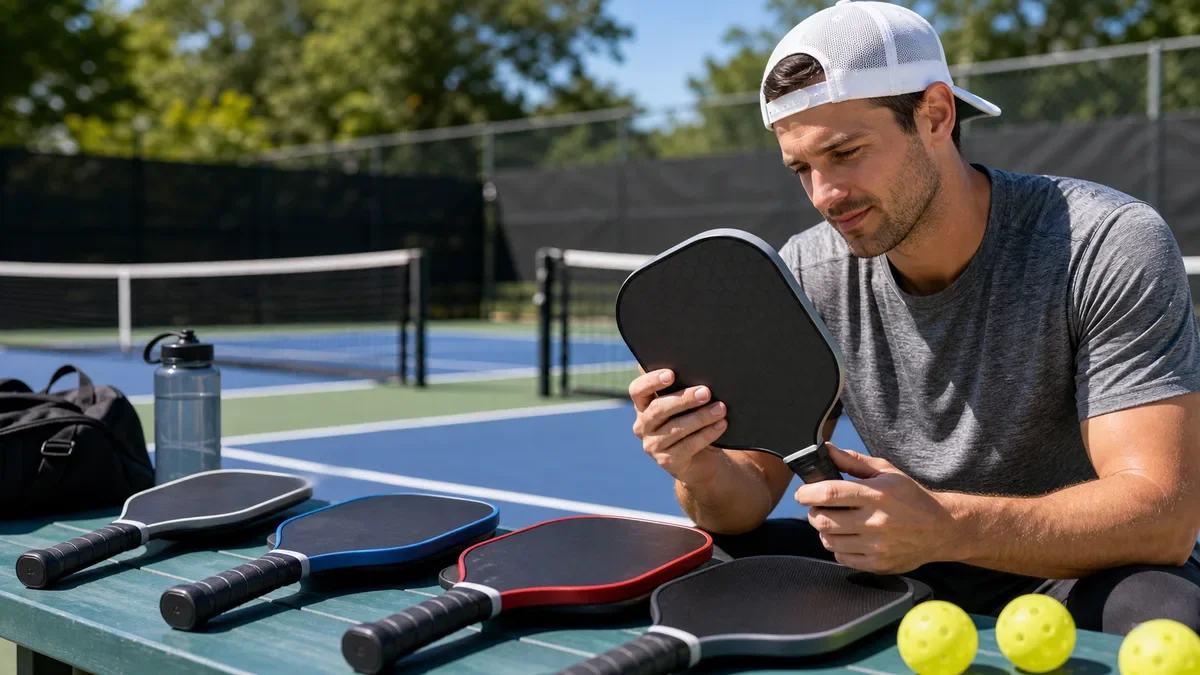
The best pickleball paddle for power beginners is not the hardest-hitting paddle on the shelf. Beginners need enough pop to finish easy balls, but they also need a forgiving sweet spot, comfortable grip, and control on returns, resets, and kitchen shots. Too much power too early can make the game harder.
A smart beginner power paddle balances weight, thickness, shape, face feel, and swing speed. The best pickleball paddle for power beginners helps you hit deeper without spraying balls long every rally.
| What you see | Likely cause | First move |
|---|---|---|
| Shots fly long | Paddle has too much pop or swing is too big | Choose more control or slow the swing |
| Power feels weak | Paddle is too light or soft for your swing | Try moderate weight and a firmer face |
| Hand gets tired | Weight or grip size is wrong | Test comfort before chasing power |
| Sweet spot feels tiny | Shape is too demanding | Use wider or hybrid shape first |
Power Should Not Mean Uncontrolled Pop
Many beginners hear power and immediately choose the stiffest, longest, most explosive paddle they can find. That can help on one drive and hurt on ten soft shots. The best pickleball paddle for power beginners gives extra depth without making drops, blocks, and resets impossible.
Look for a paddle that feels stable on contact. If the ball jumps unpredictably, your confidence will drop. Beginners usually improve faster with a balanced paddle than with a pure power model.
Weight and Thickness Matter
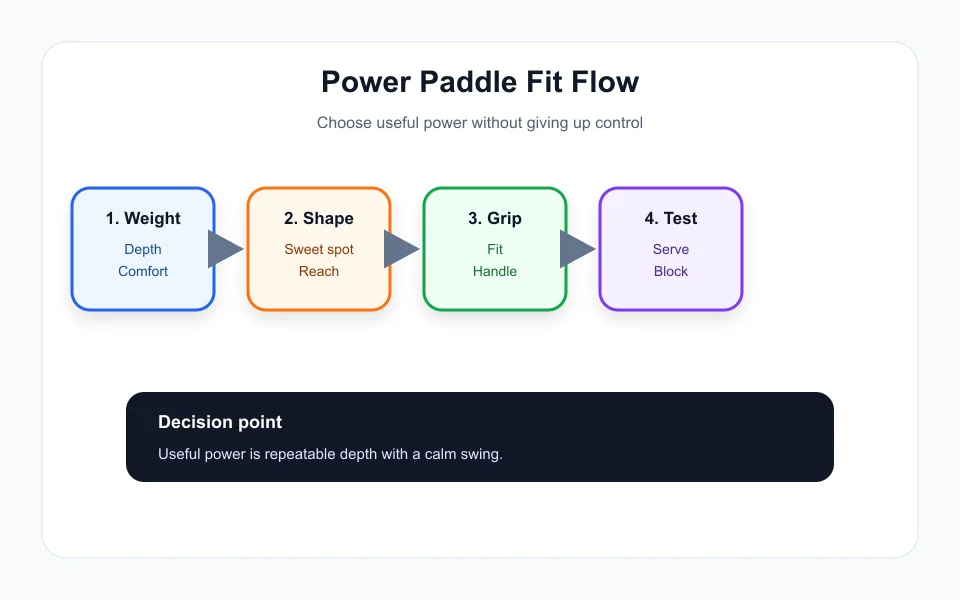
A slightly heavier paddle can add power, but too much weight slows reactions and can bother the wrist, elbow, or shoulder. A very light paddle is quick but may require more effort to drive the ball deep. Most beginners should test moderate weight first.
Thickness changes feel. Thicker paddles often feel more controlled and forgiving, while thinner paddles can feel quicker or more powerful. The best pickleball paddle for power beginners usually sits in the middle: enough stability for control, enough response for deeper shots.
For nearby paddle and beginner decisions, compare Pickleball Beginner Mistakes: Simple Fixes for Serves, Kitchen, Scoring, and Footwork, How to Serve in Pickleball for Beginners: A Simple Baseline Routine, Best Pickleball Paddle Under 100: What Budget Players Should Actually Compare, Pickleball Court Shoes vs Tennis Shoes: Which Pair Makes Sense for Rec Play?, and Pickleball Warm Up Exercises for Beginners: An 8-Minute Court Routine.
Choose Shape by Forgiveness
Elongated paddles can add reach and leverage, but they may shrink the easy sweet spot. Widebody or hybrid shapes can be more forgiving for newer players. If you are still building contact consistency, forgiveness is power because clean contact sends the ball deeper.
If you come from tennis, you may like extra reach. If you are brand new, choose the shape that helps you hit the center more often. The best pickleball paddle for power beginners is the one that produces repeatable depth, not occasional highlight shots.
Grip Size and Comfort Are Not Details
A grip that is too small can make you squeeze too hard. A grip that is too large can slow wrist action and make resets clumsy. Power needs relaxed contact, so grip comfort matters. Use overgrips to fine-tune size before replacing a paddle.
Also check handle length. Two-handed backhands need more handle room. One-handed players may prefer a shorter handle with more face area.
How to Test Before Buying
Hit ten serves, ten returns, ten kitchen blocks, and ten drives. Do not judge only the drive. If the paddle helps you serve deep but makes every block pop up, it is not the right fit yet.
The best pickleball paddle for power beginners should make normal shots easier. Buy the paddle that gives you depth with a calm swing and still lets you slow the ball down near the kitchen.
Quick Checklist
- Choose useful depth over maximum pop.
- Test moderate weight before going heavy.
- Prioritize forgiving shape and sweet spot.
- Check grip size and handle length.
- Test serves, returns, blocks, and drives before buying.
Bottom Line
The best pickleball paddle for power beginners adds depth without stealing control. Pick balanced weight, forgiving shape, comfortable grip, and predictable contact before chasing pure power. If two paddles feel close, choose the one that keeps returns and kitchen blocks calmer, not the one that wins a single drive test. A beginner who can keep the ball low and deep will get more value than a beginner who only hits harder sometimes.
Frequently Asked Questions
Should beginners buy a power paddle?
Beginners can use a power-friendly paddle, but it should still offer control, forgiveness, and a comfortable grip.
Is a heavier paddle better for power?
A little more weight can add depth, but too much weight can slow reactions and strain the arm. Test comfort first.
What shape is best for power beginners?
Many beginners do well with a hybrid or widebody shape because a forgiving sweet spot creates more repeatable power.
Official sources: USA Pickleball approved paddle list · USA Pickleball approved equipment. Check current program pages before applying.