Training
Pickleball Drills at Home for Beginners: A Simple Practice Plan
Use these pickleball drills at home beginners can run in 20 minutes to build paddle control, serve rhythm, footwork, and safer habits.
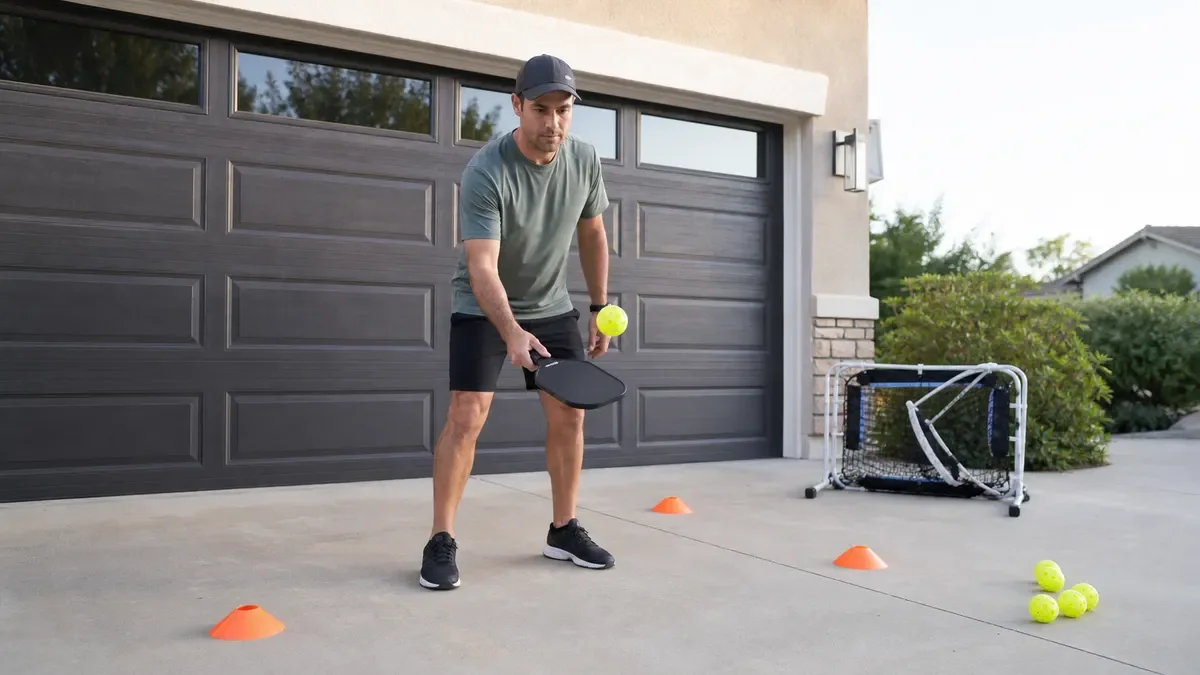
If you searched for pickleball drills at home beginners can actually do without a court, start with control, not power. A driveway, garage wall, hallway, or small patio can give you enough room to train cleaner contact, steadier feet, softer hands, and better serve rhythm before your next open play session.
Think of this as a 20 to 30 minute practice loop. You are not trying to win a rally in your garage. You are teaching your paddle, feet, and eyes to stop rushing.
| What you see | Likely cause | First move |
|---|---|---|
| Balls pop too high | Firm wrist or a big backswing | Shorten the swing and finish below chest height |
| Wall returns feel wild | You are standing too close or hitting too hard | Step back and aim for soft waist-high contact |
| Serves miss long | Follow-through is driving upward too much | Swing low to high, then freeze your finish |
| Feet feel late | You are reaching instead of moving first | Split step before each touch |
| Backhand contact feels weak | Paddle face is opening at impact | Keep the face slightly closed and contact in front |
What You Need Before You Start
- Pick a safe space, 2 minutes. Use a flat driveway, garage, basement, or patio with enough room to swing without hitting glass, cars, people, or pets. A wall is helpful but not required.
- Gather simple gear, 1 minute. You need a paddle, three to six balls, painter's tape, and two cones or water bottles for foot markers. If you are still choosing equipment, the guide to pickleball paddle weight for beginners explains why a controllable paddle matters more than a heavy power paddle early on.
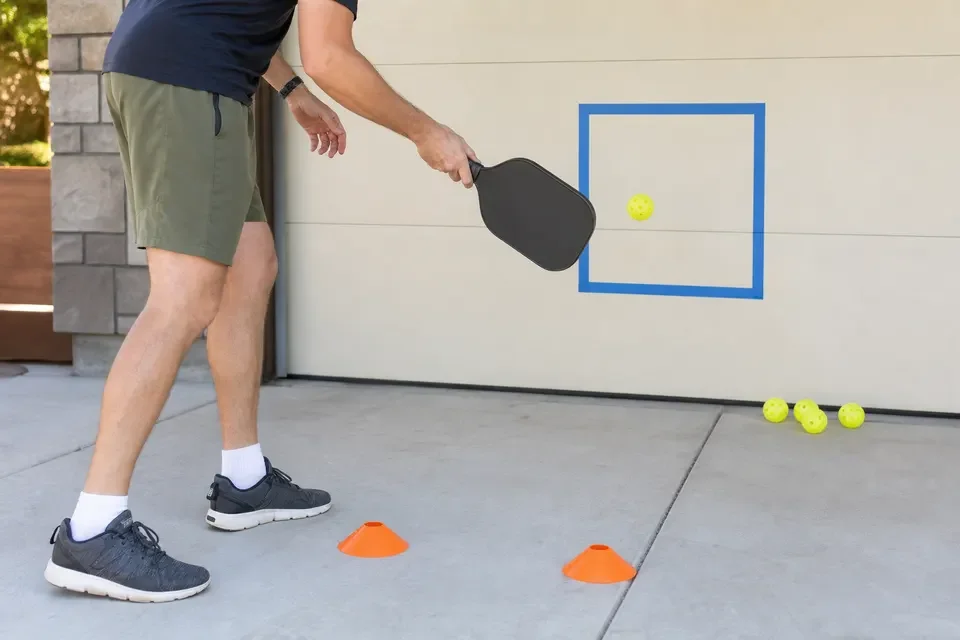
- Mark your targets, 2 minutes. Put a tape square on the wall at about waist to chest height. Place two cones shoulder-width apart so your feet reset in the same spot after each rep.
- Warm up first, 5 minutes. March in place, rotate shoulders, make easy shadow swings, and do a few side steps. For a fuller version, use this beginner pickleball warm-up routine before harder sessions.
Pickleball drills at home beginners can do safely
- Paddle taps, 4 minutes. Hold the paddle out front and tap the ball upward, no higher than your eyes. Count how many touches you can make without chasing the ball.
- Forehand to backhand switches, 4 minutes. Alternate one forehand tap and one backhand tap. Keep your elbow relaxed and turn the paddle face, not your whole body.
- Low bounce control, 3 minutes. Let the ball bounce once on the ground, then lift it gently back to knee or waist height. This builds the soft touch you need for resets and dinks.
- Pressure round, 2 minutes. Set a timer and restart your count every time the ball climbs above your head. Most beginners learn faster when the mistake is obvious right away.
Cleaner contact starts with paddle angle. If the ball keeps sliding off the face, read the primer on paddle surface grit, spin, and control, then come back and keep the touch drill soft.
Build a Wall Drill That Teaches Control
- Stand 6 to 8 feet from the wall, 2 minutes. Hit easy forehands into the tape square. Let the ball bounce before each return so you have time to reset.
- Add backhands, 4 minutes. Hit five forehands, then five backhands. Keep your chest facing the wall and contact the ball in front of your lead hip.
- Practice dink height, 5 minutes. Aim for a soft arc that would clear a net but land short. If you have a portable net, place it a few feet in front of the wall as a visual cue.
- Finish with a 20-ball control test, 3 minutes. Your goal is not speed. Your goal is 20 playable returns that come back at a height you could handle on the next shot.
Honestly, most home drills go wrong because people turn a control drill into a power contest. If your paddle is too lively, the comparison of graphite vs fiberglass paddle feel can help you understand why some paddles launch the ball more than others.
Practice Serve Rhythm Without a Court
- Shadow the motion, 2 minutes. Stand behind an imaginary baseline and rehearse an underhand swing. Freeze the finish with your paddle pointing toward your target.
- Drop-and-swing reps, 5 minutes. Drop the ball from your non-paddle hand and swing smoothly after the bounce. Use a driveway line, towel, or tape strip as your target lane.
- Serve to zones, 6 minutes. Pick three landing zones: deep middle, deep right, and deep left. Hit five easy serves to each zone before you add any pace.
- Reset after misses, 2 minutes. If two serves miss long, slow the swing and finish lower. If two miss short, step through the ball instead of flicking your wrist.
Rule-wise, the serve still has to fit real pickleball. USA Pickleball's basic rules explain the serve, the two-bounce rule, and the non-volley zone, so keep home reps connected to how points actually start. The deeper beginner serving routine is a good next step, and the serving rules guide is worth checking before league play.
Scoring can also change how you practice serves because only the serving side scores in standard pickleball. If that still feels fuzzy, review pickleball scoring rules for beginners before you build match-like serve targets.
Add Footwork So the Drill Transfers to Games
- Split-step before contact, 3 minutes. Hop lightly into a balanced stance before each wall return or tap. Land with your weight centered, not falling backward.
- Shuffle, do not cross over, 4 minutes. Place two cones about six feet apart. Shuffle from cone to cone, stop, and make one shadow swing at each end.
- Recover to ready position, 5 minutes. After every swing, bring the paddle back to the middle of your body. Beginners lose rallies because the paddle stays parked after the previous shot.
- Run a 30-second game-speed round, 3 minutes. Use quick feet but soft hands. If your swing gets big, pause and restart.
Shoes matter when you add movement. Running shoes can feel comfortable but may not support side-to-side stops well, which is why the court shoes vs tennis shoes breakdown is useful for home and court practice. Players who need extra room should also compare pickleball shoes for wide feet, while older rec players may want the stability notes in the senior pickleball shoe guide.
Turn the Drills Into a 20-Minute Routine
- Minutes 0 to 5: warm up and taps. Move gently, then do paddle taps and low bounce control. Stop before your grip gets tense.
- Minutes 5 to 12: wall control. Alternate forehands, backhands, and soft dink-height balls into the tape square.
- Minutes 12 to 17: serve rhythm. Hit smooth drop-and-swing serves into target zones. Track makes, not speed.
- Minutes 17 to 20: footwork finish. Shuffle, split step, shadow swing, and recover your paddle to ready position after every rep.
Want a bigger practice menu after this routine feels easy? The site has a broader set of beginner pickleball drills, plus a practical guide to common beginner mistakes that shows which habits to fix first.
Gear Checks That Make Home Practice Easier
- Check paddle weight, 2 minutes. If your forearm feels tired after a short wall round, the paddle may be too heavy or too head-heavy for daily reps. Compare how to choose paddle weight and the lightweight vs heavyweight paddle breakdown before buying another paddle.
- Check grip size, 2 minutes. A grip that is too small can make you squeeze, while a grip that is too large can slow hand changes. Use the paddle grip size guide if the handle feels awkward.
- Check paddle shape, 3 minutes. Widebody paddles usually feel forgiving, while elongated shapes add reach but can be less easy to square up. Compare the paddle shape guide and the elongated vs standard paddle explainer if your contact point feels inconsistent.
- Check your ball, 1 minute. Indoor and outdoor balls feel different off a wall and paddle. The indoor vs outdoor pickleball balls guide explains why bounce, holes, and durability change your practice feel.
- Check your budget, 3 minutes. Beginners do not need the most expensive paddle for home drills. Start with the best paddle under $100 guide, then compare options for a power-friendly beginner paddle only if you can still control touch shots.
Quick Checklist
- Warm up before you start swinging.
- Keep home drills soft enough that you can repeat them.
- Use a wall target for control, not for maximum speed.
- Practice forehand and backhand touches every session.
- Freeze your serve finish so you can spot swing path mistakes.
- Split step before contact and recover your paddle to the middle.
- Stop the session when your form gets sloppy.
A good home routine should make your next court session calmer. Start with 20 minutes, track one mistake at a time, and keep the ball under control before you add speed. That is how at-home practice turns into better rallies instead of just more swings.
Official sources: Rule references were checked against the USA Pickleball Rules Summary and the Official USA Pickleball Rulebook page.
Frequently Asked Questions
What pickleball drills can I do at home?
Start with paddle taps, wall forehands, wall backhands, drop-and-swing serves, and split-step footwork. Keep the ball slow enough that you can repeat the motion without chasing it.
How long should beginners practice pickleball at home?
Twenty minutes is enough for most beginner sessions. Use five minutes for warm-up and taps, seven minutes for wall control, five minutes for serves, and three minutes for footwork.
Can you practice pickleball without a court?
Yes, you can train touch, swing path, ready position, and serve rhythm without a court. You still need court time for scoring, partner movement, and judging real ball depth.
Is a wall good for pickleball practice?
A wall is useful if you hit softly and aim at a target. Stand far enough back to reset your feet, and avoid turning every return into a hard drive.
What is the best beginner pickleball drill?
The best first drill is soft paddle taps because it teaches paddle angle and control. Once that feels steady, add a wall target and alternate forehand and backhand touches.