Training
Beginner Doubles Pickleball Strategy: Where to Stand, What to Hit, and How to Talk
Pickleball strategy for beginners doubles: learn positioning, shot choices, partner calls, and simple habits that win more rec games.
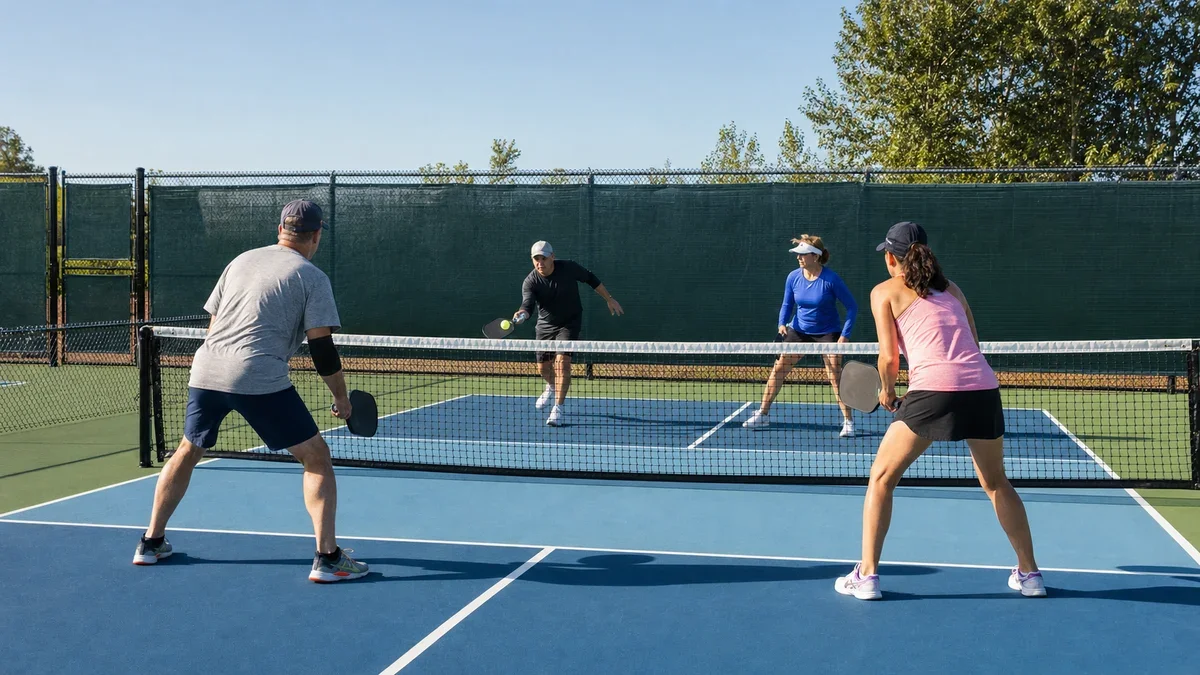
If you are searching for pickleball strategy for beginners doubles, start with court position before you worry about fancy shots. Recreational doubles is usually won by the team that gets set, keeps the ball low, and talks early enough to avoid the same middle-ball mistake again.
Good strategy at this level is not complicated. You need a few repeatable habits: return deep, move forward under control, keep both partners connected, and make opponents hit up from awkward spots.
| What you see | Likely cause | First move |
|---|---|---|
| You and your partner both swing at the middle ball | No pre-point call or dominant forehand plan | Agree who owns middle balls before the serve |
| You keep getting passed down the line | One player is drifting too far toward the center | Reset your outside foot near your sideline |
| Opponents attack every third shot | Your team is hitting high balls from the transition zone | Drive low or drop softly, then wait for a ball you can attack |
| Your returns land short | You are trying to do too much with the return | Hit a safer deep return and move in behind it |
| Rallies feel rushed at the kitchen | Your paddle is low and your feet are still moving | Split step, set the paddle in front, and block first |
Pickleball Strategy for Beginners Doubles: The First Five Habits
Build your doubles game around five habits before adding trick shots. Return deep. Get to the non-volley zone when you can. Keep a partner gap small enough that opponents cannot hit through it. Aim low at feet. Call middle balls before both paddles arrive late.
That sounds basic because it is. Most beginner doubles points fall apart from late decisions, not from a lack of spin or power.
Start Every Point With the Right Job
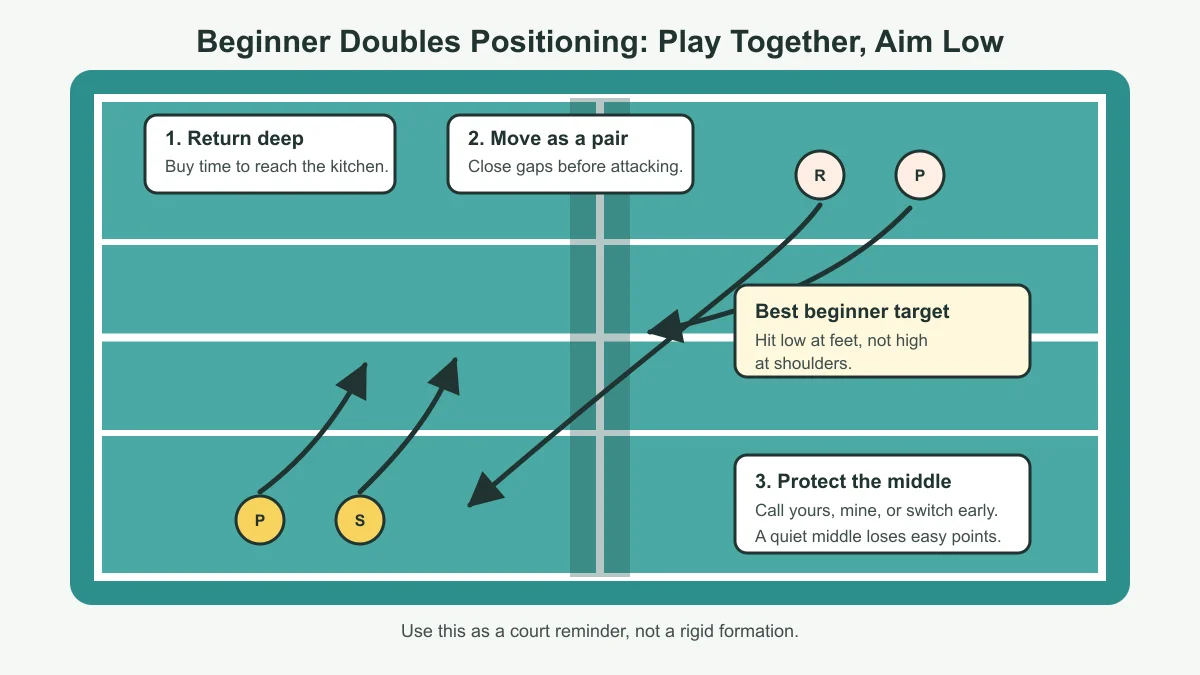
Serving team and receiving team have different jobs at the start. The receiving team usually has the easier path to the kitchen because the receiver can return deep and move forward while the serving team waits for the return to bounce.
Serving teams should resist the urge to sprint blindly. Serve, recover behind the baseline, let the return bounce, and then decide whether the third shot should be a drop, drive, or safer reset.
New players often copy aggressive highlight clips and rush the first three shots. I would be skeptical of that approach in rec play. A boring deep return and a controlled third shot win more beginner points than a rushed winner attempt.
Where to Stand in Doubles
Once both teams are allowed to volley, the kitchen line becomes home base. That does not mean you stand frozen on the line. It means you and your partner try to control space there, then back up only when a lob, hard drive, or poor reset forces you to.
Think of your team as connected by a short rope. If your partner slides right to cover a crosscourt dink, you slide right too. If you stay planted, you open a lane through the middle.
Keep enough distance to avoid paddle clashes, but not so much that a soft ball lands between you. A good beginner spacing cue is one big step wider than shoulder width from your partner when both of you are at the kitchen.
Return Deep, Then Move Forward
A deep return is the simplest advantage in beginner doubles. It pushes the serving team back, gives you time to move in, and makes their third shot harder.
Do not chase a perfect sideline target. Aim deep through the middle or toward the safer crosscourt corner. Missing a return is one of the fastest ways to give away a point.
Pair this with a steady beginner serving routine in practice so both teams can rehearse the opening rhythm instead of just hoping the point starts cleanly.
Attack Feet, Not Shoulders
Beginner doubles gets easier when you stop hitting comfortable balls to the opponent's upper body. High balls near the shoulder invite blocks, counters, and accidental winners. Low balls near the feet force pop-ups.
Use this target on drives, firm volleys, and even defensive resets. If an opponent is moving forward, their feet are even better. They have to bend, stop, and lift the ball, which is a lot to ask under pressure.
Who Covers the Middle?
Middle balls cause more beginner arguments than almost anything else. Fix it before the point starts. In many right-handed pairings, the player with the forehand in the middle takes more of those balls, but that is a plan, not a law.
Say it out loud: "I have middle," "you take lobs," or "switch if they pull us wide." Short calls beat polite silence.
For scoring situations where serving positions make the court feel confusing, use the singles and doubles scoring guide and the deeper scoring rules for beginners. Knowing who serves next also helps partners reset mentally after a messy point.
The Kitchen Line Is Not a Finish Line
Getting to the kitchen line matters, but arriving off balance does not help. Move forward after a good return or drop, then split step before your opponent hits. If you are still running through contact, your paddle will usually be late.
At the line, hold the paddle out front and expect the next ball. Beginners often let the paddle hang near the thigh, then wonder why a medium-speed volley feels too fast.
Before longer sessions, run an 8-minute warm up routine. Good stops and starts are easier when your ankles, hips, and shoulders are ready.
What to Do From the Transition Zone
The transition zone is the space between the baseline and kitchen. It is not a great place to camp. Balls land at your feet there, and hard drives feel faster because you are not set.
If you are caught there, block the ball softly, keep it low, and move only after you see a safer ball. Do not swing bigger just because you feel trapped.
Practicing resets is worth it. The beginner control drills and at-home beginner drills both build the touch you need when the point gets uncomfortable.
Partner Communication That Actually Helps
Useful calls are short and early. "Mine." "Yours." "Out." "Bounce." "Switch." Anything longer usually arrives after the ball is already past you.
Make one call before the serve too. Decide who takes the middle, who tracks lobs, or whether the returner is coming in. That tiny habit can clean up half the confusion in beginner doubles.
After a point, keep feedback specific. "I will cover middle on backhands" is helpful. "We need to communicate" is too vague to change the next rally.
Gear Choices That Affect Strategy
Strategy is mostly skill and decisions, but gear can make some habits easier. A paddle that is too heavy may make quick blocks late. A paddle that is too light may feel unstable on hard drives.
If your paddle feels slow at the kitchen or shaky on resets, start with pick the right paddle weight. If your feet slide or you struggle to stop laterally, compare court shoes vs tennis shoes before blaming every missed volley on technique.
Gear will not replace better choices. It just removes avoidable friction.
Practice Plan for Your Next Game
Pick one theme for a session. Do not try to fix serving, dinking, lobs, middle coverage, and footwork in the same hour. That turns practice into noise.
Try this sequence: ten deep returns each, ten third-shot drops or drives each, five minutes of crosscourt dinks, then a game where your only goal is to call every middle ball. Track the habit, not just the score.
If you keep making the same mistake, compare it with our beginner mistakes guide. Patterns are easier to fix when you name them.
Quick Checklist
- Return deep and move forward behind the shot.
- Let the required opening bounces happen before attacking early.
- Move with your partner so the middle gap stays small.
- Aim low at opponent feet, especially when they are moving.
- Call middle balls before the point starts.
- Split step before contact instead of running through the shot.
- Practice one habit per session so improvement is easy to see.
Frequently Asked Questions
what is the best doubles strategy for beginner pickleball players?
Return deep, get to the kitchen line under control, keep your partner spacing tight, and aim low at opponent feet. Those four habits matter more than power at the beginner level.
where should beginners stand in doubles pickleball?
After the serve and return sequence, both partners usually want to work toward the non-volley zone line. Stay connected with your partner so you cover the middle without leaving the sideline wide open.
who takes the middle shot in pickleball doubles?
The team should decide before the point. Often the player with the forehand in the middle takes more balls, but partner skill, court position, and left-handed pairings can change that plan.
should beginners dink or drive in doubles pickleball?
Use both, but choose the safer shot for the ball you receive. Drive low when you are balanced and have space. Dink or reset when the ball is low, you are stretched, or you need time to recover.
how do you stop popping the ball up in doubles pickleball?
Soften your grip, set your paddle in front, and aim for a lower target over the net. Many pop-ups happen because players swing at low balls instead of blocking or lifting them gently.
how can two beginners win more doubles games?
Keep serves and returns in, talk early, avoid attacking from bad positions, and make opponents hit one more ball. At beginner level, steady teams beat flashy teams more often than people expect.
Bottom Line
Beginner doubles strategy is about giving your team more organized chances. Return deep, move together, protect the middle, and make opponents hit up from their feet.
Build those habits first. The sharper shots will matter more once your positioning and partner calls stop leaking easy points.
Official sources: USA Pickleball Rules & Regulations · USA Pickleball Rules Summary.