Rules
The Double Bounce Rule in Pickleball, Explained Without the Confusion
Pickleball rules double bounce explained in plain English: learn the two-bounce sequence, common faults, and when volleys are legal.
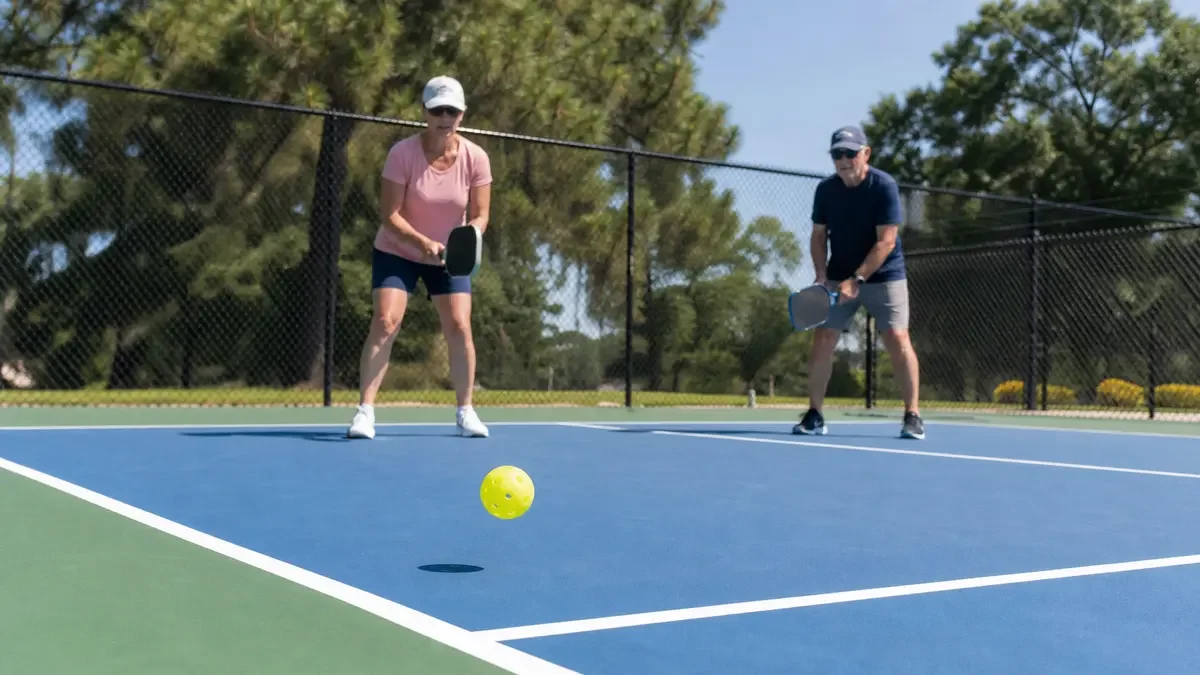
If you searched for pickleball rules double bounce explained, the main thing to know is this: pickleball has a two-bounce opening sequence, and it is not the same thing as letting the ball bounce twice on your side during a rally. The name trips up new players because people still say "double bounce rule," while official USA Pickleball material now uses "two-bounce rule" for the legal opening sequence.
Get this one rule right and your first few games feel much less chaotic. You will know when to wait, when you can move forward, and why a ball that bounces twice on one side usually ends the rally.
For a quick bench-side answer, pickleball rules double bounce explained means one required bounce on the receiver's side and one required bounce on the server's side before anyone starts volleying.
| What you see | Likely cause | First move |
|---|---|---|
| Receiver volleys the serve | They skipped the first required bounce | Call the fault, then reset the serve |
| Serving team volleys the return | They forgot the second required bounce | Remind them the return must bounce |
| Ball bounces twice on one side | The player did not return it in time | Treat it as a dead ball or fault |
| Players argue over "double bounce" | They are using old or casual wording | Say "two-bounce rule" for clarity |
Pickleball Rules Double Bounce Explained: The Short Version
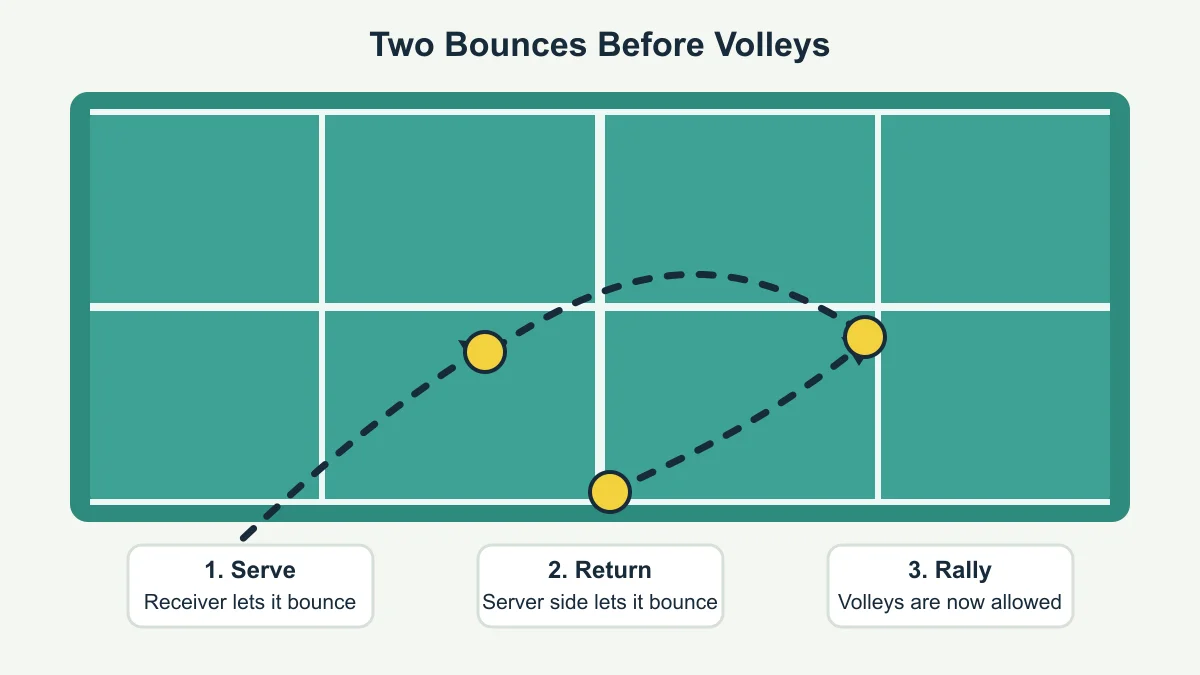
Start every normal rally with two required bounces. First, the serve must bounce on the receiving side before the receiver hits it. Second, the return of serve must bounce on the serving side before the serving team hits it.
After those two bounces happen, either team may hit the ball out of the air, as long as the player is not breaking the non-volley zone rule. That is the cleanest version of pickleball rules double bounce explained: bounce, bounce, then open play.
Why the Rule Exists
Picture a strong server rushing straight to the kitchen line and smashing the first return before it drops. Without the two-bounce rule, the serving team would get a major serve-and-volley advantage before the receiver had a fair chance to start the point.
For beginners, the rule slows the first three shots down just enough. The receiver gets to return the serve after a bounce. The serving team then has to let that return bounce. Only after that can both sides settle into normal rally decisions.
That is why pickleball rules double bounce explained is really a positioning lesson, not just a rule definition. Wait through the opening sequence, then move with purpose.
The Three-Shot Example Most Beginners Need
- Serve: The server hits the ball crosscourt into the correct service box. The receiver must let it bounce before returning.
- Return: The receiver sends the ball back deep. The serving team must let that return bounce before touching it.
- Third shot: The serving team can now drive, drop, or hit a softer reset. Volleys are allowed after the two-bounce sequence, subject to kitchen rules.
Most beginner faults happen on step two. The serving team sees a floating return, gets excited, and volleys it too early. If you want pickleball rules double bounce explained in one court habit, tell the serving team: stay patient until the return lands.
Two-Bounce Rule vs. Double-Bounce Fault
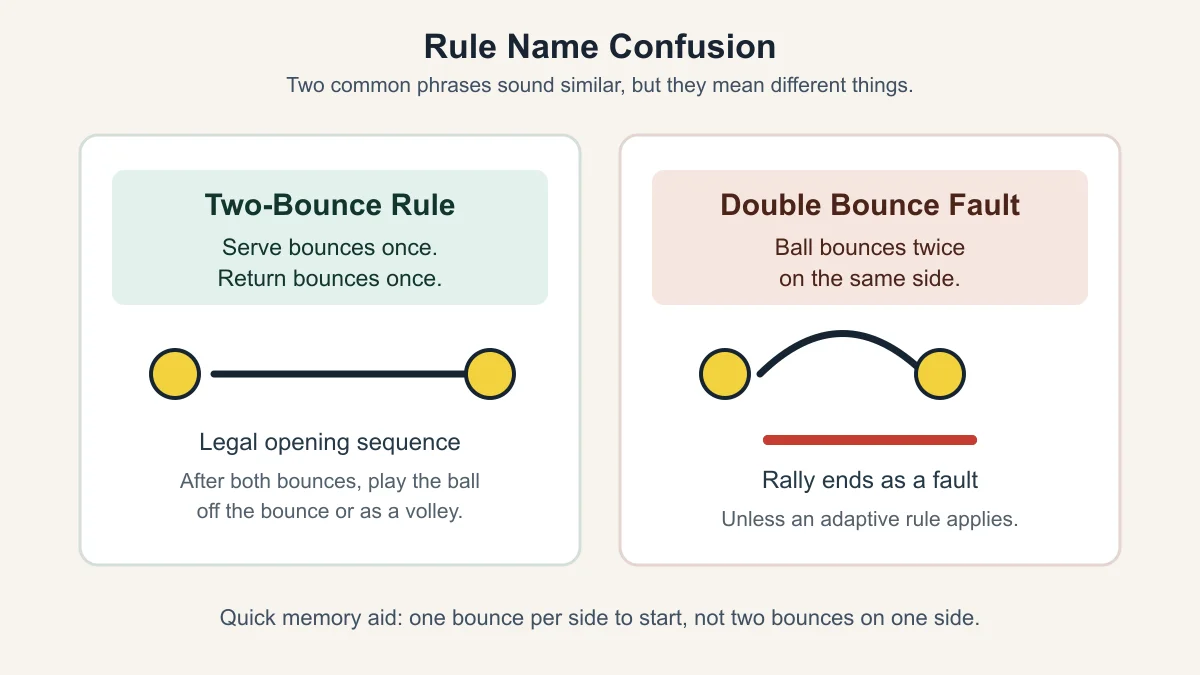
Here is where the wording matters. The two-bounce rule is legal and required at the start of the rally. A double-bounce fault usually means the ball bounced twice on the same side before anyone returned it.
Say the receiver lets the serve bounce, swings late, and misses. That is a fault. Say the serving team lets the return bounce once, hesitates, and the ball bounces again on their side. That is also a fault in standard play.
So when someone asks for pickleball rules double bounce explained, answer both parts. The opening rule requires one bounce per side. A ball bouncing twice on one side is normally a lost rally.
What Changes After the Second Bounce?
Once the serve and return have both bounced, the rally opens up. You can play groundstrokes, volleys, drops, drives, lobs, and resets. The big remaining limit is the non-volley zone, often called the kitchen.
Standing in the kitchen is not automatically illegal. Volleying from the kitchen is the problem. If the ball bounces first, you can step into the kitchen and hit it after the bounce. If you volley, your feet and momentum have to stay out of the non-volley zone.
New players often connect the two-bounce rule with kitchen rules because both tell you when not to hit the ball out of the air. Keep them separate. The two-bounce rule controls the opening sequence. Kitchen rules control volleys near the net.
If you are teaching a first-time player, repeat pickleball rules double bounce explained as a timing cue first and a rulebook phrase second. The timing is what prevents the early volley.
Singles, Doubles, and Recreational Play
The two-bounce rule applies in both singles and doubles. Doubles just adds more moving parts because partners may be tempted to crash forward at different times.
On the receiving team, the player receiving serve lets it bounce and returns it. Their partner can move, but the receiver still has to respect the bounce. On the serving team, either partner may hit the return after it bounces, depending on where the ball lands and who has the better play.
For open play, I would rather hear partners overcommunicate than guess. A quick "let it bounce" from the non-hitting partner saves more beginner points than any fancy paddle choice.
Common Beginner Mistakes
Rushing the net too early is the big one. The serving team serves, takes two big steps forward, sees the return hanging in the air, and forgets it still has to bounce. Honestly, this is where people usually get it wrong.
Another mistake is thinking the serve itself counts as one bounce before it crosses the net. It does not. The rule is about what happens after the serve lands in the receiving court and after the return lands on the serving side.
One more: players sometimes call "double bounce" when they mean "two-bounce rule." If your group is new, pause and define the terms. A calm 10-second explanation beats a five-minute argument.
How to Practice It Without Stopping Every Rally
Run a simple start-rally drill. One player serves at half speed, the receiver returns deep, and the serving team waits for that return to bounce before playing a controlled third shot. Repeat for five minutes.
Pair that with a simple baseline serving routine so the first shot is predictable. Then add beginner control drills that make the third shot less rushed.
If players are still volleying early, send them to the beginner mistakes guide and have them watch their first two steps after serving. Shoes matter too, especially if you are split-stepping and changing direction, so our court shoe comparison is worth reading before you play long sessions.
How This Affects Scoring and Side Outs
A two-bounce mistake is handled like other rally faults. If the receiving team commits the fault, the serving team scores a point under standard side-out scoring. If the serving team commits the fault, the result is a side out or a move to the second server in doubles, depending on the current server position.
For the scoring side, use our pickleball scoring rules for beginners after you understand the bounce sequence. For serve-specific questions, the serving rules guide covers the setup, foot position, and legal serve basics.
Need pickleball rules double bounce explained during a game? Say it this way: receiver lets the serve bounce, server side lets the return bounce, then normal rally rules take over.
That version of pickleball rules double bounce explained also helps with scoring calls because you can identify which side touched the ball too early or waited too long.
Adaptive Play and House Rules
Official rulebooks include adaptations for wheelchair and some adaptive play, including allowances that can change how many bounces are permitted before a return. That matters because a blanket "two bounces is always a fault" is not accurate for every format.
Recreational groups also make house rules for mobility, injury recovery, or mixed-skill play. That is fine if everyone agrees before the game starts. For tournament or league play, check the organizer's rule set and the current USA Pickleball rulebook.
For standard recreational games without an agreed adaptation, pickleball rules double bounce explained still means one required bounce on each side to start, then the ball must be returned before a second bounce on the same side.
Quick Checklist
- Let the serve bounce before the receiver hits it.
- Let the return of serve bounce before the serving team hits it.
- After those two bounces, volleys are allowed outside the kitchen.
- Do not confuse the legal two-bounce rule with a double-bounce fault.
- Call "let it bounce" early if your partner is about to volley too soon.
- Check adaptive or league rules before assuming every format is identical.
- Use pickleball rules double bounce explained as a quick reminder: one bounce each side, then play.
Frequently Asked Questions
what is the double bounce rule in pickleball?
Most players use that phrase to mean the two-bounce rule. The serve must bounce before the receiver returns it, and the return must bounce before the serving team hits it. After that, both teams can volley when legal.
is the double bounce rule the same as the two bounce rule?
In casual conversation, yes, people often mean the same thing. Official wording is cleaner with "two-bounce rule" because "double bounce" can also describe a fault when the ball bounces twice on one side. That wording is why pickleball rules double bounce explained should always separate the legal sequence from the fault.
can you volley the third shot in pickleball?
Yes, but only if the return of serve has already bounced on the serving team's side. If the serving team volleys the return before it bounces, that is a fault.
does the serve count as one of the two bounces?
No. The required sequence begins after the serve crosses the net and lands in the receiving court. The receiver lets that serve bounce, then the serving team lets the return bounce.
what happens if the ball bounces twice in pickleball?
In standard play, the rally ends as a fault against the side that let the ball bounce twice before returning it. Adaptive formats can have different bounce allowances, so check the rules for that game.
That is the fault side of pickleball rules double bounce explained: two legal opening bounces are fine, but two bounces on one side usually are not.
why does pickleball have the two bounce rule?
The rule reduces the serve-and-volley advantage and helps rallies develop. For anyone wanting pickleball rules double bounce explained in practical terms, it forces both sides to play one groundstroke before volleys begin.
Bottom Line
Remember the opening rhythm: serve bounces, return bounces, rally opens. Once you separate the legal two-bounce rule from the double-bounce fault, the whole rule gets much easier to call during real games.
Keep the language simple with new players. One bounce on each side to start, then play the ball before it bounces twice on your side. That is pickleball rules double bounce explained without the noise.
Official sources: USA Pickleball Official Rulebook · USA Pickleball Rules Summary.