Paddles
Control Pickleball Paddles Tennis Players Should Try First
Find the best pickleball paddle for tennis players control, with shape, core, spin, grip, and testing tips before you buy.
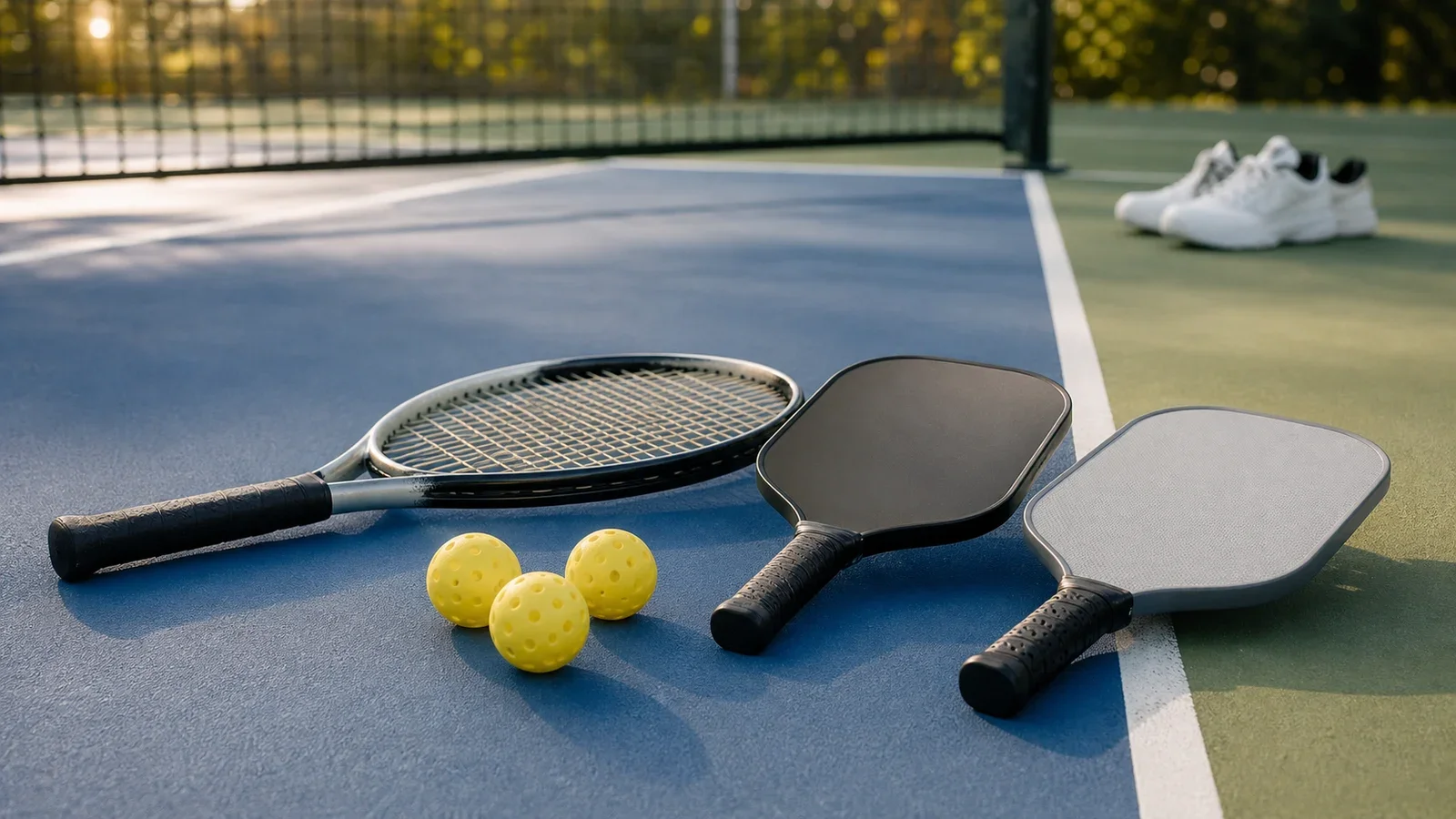
If you are searching for the best pickleball paddle for tennis players control, you are probably not looking for the softest beginner paddle on the wall. You want something that lets a tennis swing feel familiar without launching every third ball long.
Start with control, then add power. That order saves tennis players a lot of frustration because pickleball rewards compact timing, lower launch, and reliable resets more than full-court racket speed.
| What you see | Likely cause | First move |
|---|---|---|
| Drives fly long even when contact feels clean | The paddle is too lively for your tennis swing path | Try a thicker 16 mm control paddle |
| Backhand blocks twist in your hand | The sweet spot or weight balance is not stable enough | Compare hybrid and widebody shapes before going elongated |
| Dinks pop up near the kitchen | You are using a tennis-style follow-through on a short-court ball | Soften grip pressure and choose a paddle with a muted face |
| Topspin dips late but resets feel jumpy | The surface may grip well, but the core rebounds too fast | Prioritize control foam, polymer core feel, and moderate swingweight |
| The paddle feels slow in hand battles | Too much head weight or too much handle length | Stay in the midweight range and test faster shapes |
Best Pickleball Paddle for Tennis Players Control: What Actually Matters
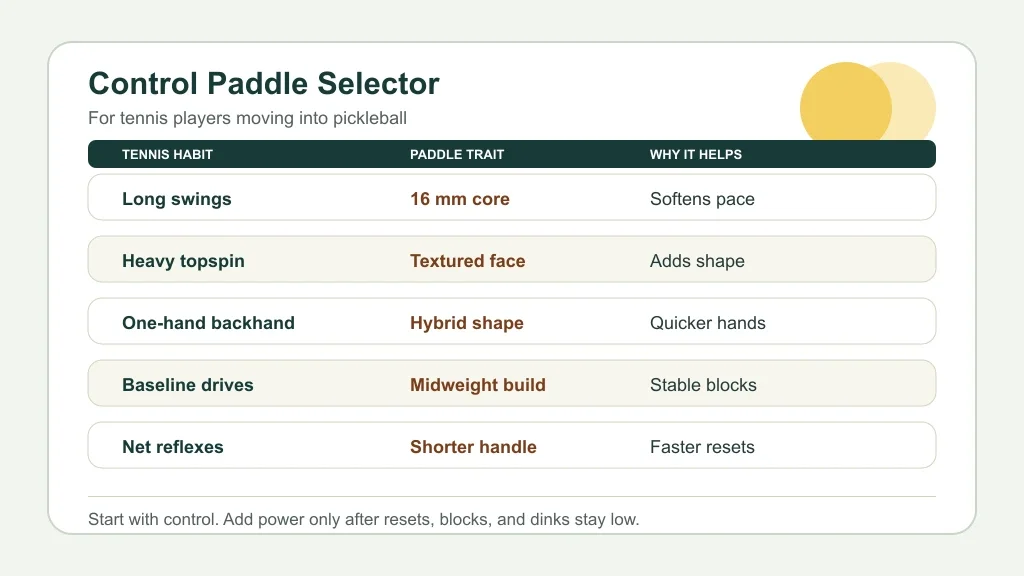
A control-first paddle for a tennis player usually has four things: a 16 mm core, a forgiving shape, a face that grips without feeling harsh, and enough stability to handle pace. Brand matters less than that mix.
Honestly, most bad first paddle choices come from chasing power too early. A former tennis player can already create pace. The harder part is taking pace off, landing a third-shot drop, and blocking a speed-up without popping it waist high.
Choose Shape Before You Choose Brand
Shape changes the way a paddle behaves in your hand. Elongated paddles feel familiar to tennis players because they add reach and often leave room for a two-handed backhand. That does not automatically make them the best first choice.
Hybrid shapes are usually easier for control. You still get reach, but the sweet spot feels less narrow and the paddle tends to move quicker at the kitchen. Widebody paddles are the most forgiving, though some tennis players find them less natural on topspin drives.
If you are still deciding, use our pickleball paddle shape guide as the first filter. Then compare materials in carbon fiber or fiberglass pickleball paddle before you worry about a specific model.
Core Thickness and Feel
For tennis players who want control, 16 mm is the safer starting point. Thicker cores usually absorb more pace, keep blocks lower, and give you more margin when your swing gets too big.
Fourteen-millimeter paddles can feel faster and more direct, but they often punish a tennis player's long follow-through. If you already drive hard, you may not need that extra pop.
Weight matters too. A paddle that is too light can wobble on counters, while a heavy one can make kitchen exchanges late. The practical range for many adult rec players is midweight, then adjust from there. For a deeper fit check, read how beginners should pick the right pickleball paddle weight.
Spin Is Useful, But Control Comes First
Tennis players often ask for spin because topspin feels like the bridge between the two sports. Fair enough. A grippy raw carbon or textured surface can help you shape drives and rolls.
But spin is not a rescue plan for bad height. If your paddle launches too high, extra grit may just make the miss look more dramatic. Look for a face that grips the ball and still lets you reset softly.
Our guide to pickleball paddle surface grit explains what grit can and cannot do. If you are newer to spin in pickleball, pair it with paddle traits for beginners learning spin.
Handle Length, Grip Size, and the Tennis Backhand
A two-handed backhand needs enough handle. Many tennis players feel cramped on short handles, especially if they come from a strong backhand side. That makes elongated and hybrid paddles tempting.
Still, a longer handle can move mass away from the face and shrink the sweet spot. If your main problem is control, do not buy handle length at the cost of stability.
Grip size deserves the same attention. Too small and you squeeze. Too large and quick grip changes feel clumsy. Either mistake can turn a simple block into a late punch.
How to Test a Paddle in Ten Minutes
Do not judge a paddle by the first five baseline drives. Tennis players can make almost anything feel good from the back of the court. The better test is whether you can take speed off.
- Hit ten deep returns and watch whether the ball sails.
- Block ten firm drives at the kitchen and count pop-ups.
- Dink crosscourt for two minutes with a loose grip.
- Try five third-shot drops from the transition zone.
- Finish with hand-speed counters, not full swings.
If the paddle passes those five tests, it is worth a longer demo. If it only feels good when you attack, keep looking.
Control Traits by Player Type
Former baseline grinder
Choose a 16 mm hybrid paddle with a stable face. You already know how to build a point, so you need a paddle that helps you absorb pace and place the next ball.
Heavy topspin player
Look for a grippy face, but avoid the liveliest power builds at first. You want spin that pulls the ball down, not a trampoline effect that sends counters past the baseline.
Serve-and-volley player
Prioritize fast hands and blocking control. A slightly shorter or more balanced paddle may help you reset at the kitchen better than a long, head-heavy shape.
Two-handed backhand player
Check handle length early. A hybrid or elongated paddle can make sense, but only if the sweet spot still feels forgiving on off-center blocks.
Where Gear Ends and Technique Starts
Even the right paddle will not fix tennis footwork on its own. Pickleball asks you to slow down before contact, soften your hands, and avoid swinging through every short ball.
That is why paddle choice should connect to practice. Work through pickleball drills at home for beginners, then take the same control feel into beginner doubles pickleball strategy and doubles positioning for beginner pickleball players.
Rules shape the gear decision too. If kitchen movement or the two-bounce start still feels odd, review pickleball kitchen rules, the double bounce rule, and singles and doubles pickleball scoring. Better context makes paddle testing less random.
Buying Shortlist for Tennis Players
Build a shortlist by traits, then shop models inside those lanes. Start with control paddles, add one spin-friendly option, and include one power-control paddle only if you already reset well.
- First demo: 16 mm hybrid control paddle, midweight, medium swingweight.
- Second demo: 16 mm elongated paddle with a longer handle if you use two hands.
- Third demo: widebody control paddle if you miss the sweet spot often.
- Optional demo: a power-control paddle if your soft game is already steady.
For model ideas, compare our best control pickleball paddles, power paddle guide for beginners, and best pickleball paddle under 100. Once you buy, use the pickleball paddle care guide and our guide to how long pickleball paddles last so the face stays consistent longer.
Other Gear That Affects Control
Footwear changes your paddle control more than people expect. If your shoes slide during a reset, you will grip tighter and swing late. Compare pickleball court shoes vs tennis shoes before blaming every mishit on the paddle.
Warm-up matters too. A short routine from pickleball warm up exercises for beginners can make your first game feel less rushed. If serves are still leaking points, pair paddle testing with how to serve in pickleball for beginners and the broader pickleball beginner mistakes checklist.
Quick Checklist
- Start with a 16 mm control paddle unless you already have a reliable soft game.
- Try hybrid shape before jumping straight to elongated.
- Choose handle length based on your backhand, not only on reach.
- Test blocks, dinks, and drops before judging baseline drives.
- Use spin as a bonus, not as a fix for high contact.
- Verify USA Pickleball approval if you plan to play sanctioned events.
- Buy the paddle that lowers your mistakes, not the one that wins warm-ups.
The best control paddle for a tennis player is the one that helps you stop overplaying the ball. Pick a stable 16 mm build, keep the shape forgiving, and let your tennis skills show up after the paddle gives you margin.
Frequently Asked Questions
what pickleball paddle is best for tennis players?
Most tennis players should start with a 16 mm hybrid or forgiving elongated paddle. That gives enough reach and spin potential without making blocks and resets too jumpy.
do tennis players need an elongated pickleball paddle?
No. Elongated paddles can feel familiar, especially for two-handed backhands, but hybrid shapes often give better control and a larger sweet spot for newer pickleball players.
is a 14mm or 16mm paddle better for control?
A 16 mm paddle is usually better for control because it absorbs more pace and feels softer on blocks. A 14 mm paddle can feel quicker and poppier, but it may launch more balls long.
should tennis players use a heavy pickleball paddle?
Not automatically. A heavier paddle can add stability, but too much swingweight slows hand battles. Most tennis players should start midweight and adjust after testing blocks and dinks.
how do I stop hitting pickleballs long after playing tennis?
Shorten the swing, loosen your grip, contact the ball in front, and use a control-first paddle. Practice resets and drops before adding full topspin drives back into your game.
does paddle grit help tennis players create spin?
Yes, a textured face can help shape the ball, but it is not the whole answer. Control comes from paddle angle, contact height, swing size, and a paddle that does not rebound too fast.
Official sources: USA Pickleball Rules & Regulations · USA Pickleball Approved Paddle List. Check current program pages before applying.