Paddles
Best Pickleball Paddle Traits for Beginners Learning Spin
Find the best pickleball paddle for spin beginners by comparing surface texture, weight, grip, shape, and control before you buy.
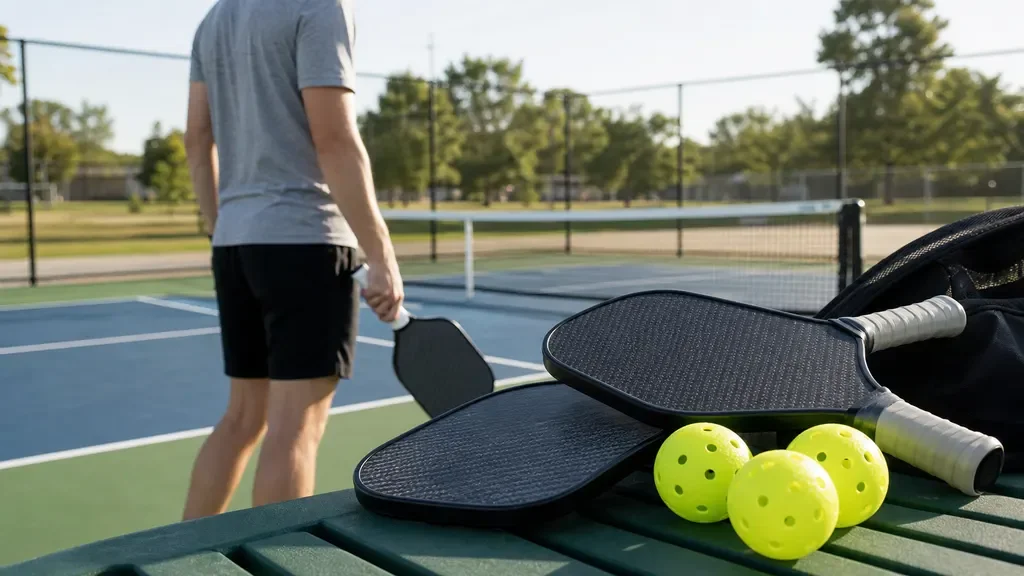
If you are searching for the best pickleball paddle for spin beginners, start with control, comfort, and a surface that helps the ball bite without making every touch shot jump. Spin is useful, but beginners usually improve faster with a paddle that forgives late contact and still lets them feel the ball.
Think of spin as one part of the setup, not the whole purchase. A gritty face can help, but weight, grip size, shape, and core thickness decide whether the paddle is easy to swing for a full rec session.
| What you see | Likely cause | First move |
|---|---|---|
| Serves float long | Paddle is too lively or heavy for your timing | Try a midweight control paddle before chasing power |
| Topspin dips into the net | You are brushing up without enough forward drive | Use a softer swing and finish through the target |
| Dinks pop up | Face is too stiff, grip pressure is too tight, or both | Loosen your hand and test a 16 mm core |
| Wrist feels late | Swing weight is too high | Choose a standard or hybrid shape instead of a long head |
Best pickleball paddle for spin beginners: the buying filter
A true best pickleball paddle for spin beginners has four traits: a textured approved face, a stable core, a grip you can hold lightly, and a weight you can repeat without forcing the wrist. Skip paddles marketed only around raw spin numbers if they feel jumpy on blocks and resets.
For most new players, a raw carbon or textured composite face is the simplest place to start. Pair it with a 16 mm core if you want a softer response, or a 14 mm to 15 mm core if you prefer a little quicker pop and can control depth.
Surface texture matters, but it is not magic
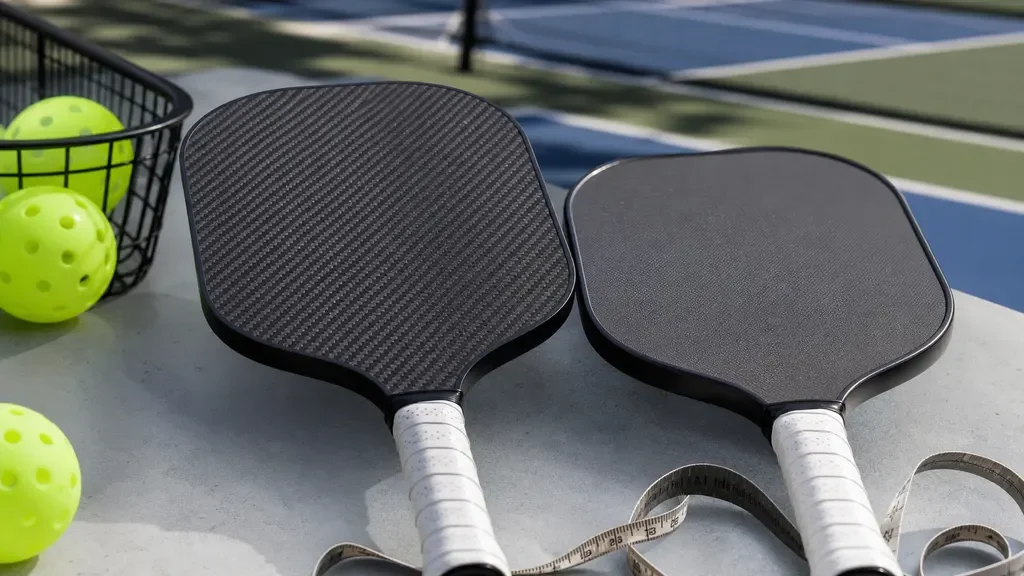
Spin comes from clean contact, paddle path, and friction. A textured face gives the ball more chance to grab, yet the best spin paddle for a beginner still needs a sweet spot large enough to handle off-center hits.
Look for clear product specs instead of vague words like "maximum grit." Official standards place limits around paddle surfaces, so useful buying language should explain face material, shape, core thickness, and intended feel, not just hype.
If you want a deeper explainer, this site's guide to paddle surface grit pairs well with the carbon fiber or fiberglass paddle faces comparison.
Weight, shape, and grip decide whether spin is repeatable
Most beginners should live around a comfortable midweight paddle. Too light can twist on blocks. Too heavy can slow the wrist, especially late in games.
Shape matters too. Widebody paddles usually give the easiest sweet spot, hybrid shapes add reach without feeling too narrow, and elongated paddles reward cleaner timing. Start with the paddle shape guide, then compare an elongated or standard paddle if reach is tempting.
Grip size is easy to overlook. A handle that feels too small can make you squeeze, while a handle that feels too large can make quick grip changes clumsy. Use the grip size guide before buying, especially if you are coming from tennis or racquetball.
How to shortlist a beginner spin paddle
Build a shortlist from needs, not buzzwords. A practical best pickleball paddle for spin beginners shortlist might include one control-first 16 mm paddle, one balanced hybrid paddle, and one budget carbon-face option.
Budget matters because beginners often learn what they like after a month of real games. Compare paddles under 100 if you are still testing the sport, and use the control paddle choices guide if placement is already a bigger problem than pace.
Avoid treating the best pickleball paddle for spin beginners as a forever paddle. A smart first paddle should make serving, returns, drops, and resets easier now. Later, you can chase more power with the power paddle guide.
Practice changes the paddle more than the paddle changes you
Gear can make spin easier to learn, but a paddle will not fix a flat swing path by itself. Use short practice blocks: ten slow topspin serves, ten crosscourt dinks, and ten third-shot drops where depth matters more than speed.
For court habits, combine a beginner-friendly paddle with beginner drills at home, a simple beginner serve routine, and a quick warm-up routine. Those three will reveal whether your paddle helps you repeat contact.
Rules and positioning matter because spin is only helpful when the ball lands in the right place. Brush up on the double bounce rule, pickleball kitchen rules, and singles and doubles scoring before blaming the paddle.
Quick Checklist
- Choose an approved textured face, not an unknown no-name surface claim.
- Try midweight first if you do not know your preferred swing feel.
- Pick 16 mm for softer control or 14 mm to 15 mm for quicker response.
- Favor a standard, widebody, or mild hybrid shape for a larger sweet spot.
- Check grip size before ordering, then adjust with overgrip if needed.
- Clean the face gently and follow basic paddle care so texture stays useful.
- Review common beginner mistakes and beginner doubles strategy before upgrading again.
So what should you buy? The best pickleball paddle for spin beginners is usually a control-first paddle with a textured face, comfortable grip, and enough stability that you can swing calmly. Pick the paddle that helps you keep the ball low first. Extra spin can come after that.
Frequently Asked Questions
what is the best pickleball paddle for spin beginners?
The best pickleball paddle for spin beginners is usually a textured, approved paddle with a forgiving sweet spot, comfortable grip, and midweight feel. Control should come before maximum spin.
do beginners need a carbon fiber pickleball paddle for spin?
No, but carbon-style textured faces often make spin easier to learn. Fiberglass and composite paddles can still work if they feel stable and predictable.
is a 14mm or 16mm paddle better for spin?
A 14 mm paddle can feel quicker and livelier, while a 16 mm paddle usually feels softer and steadier. Beginners who pop the ball up often prefer 16 mm.
how much should a beginner spend on a spin paddle?
Many beginners can start in the budget-to-midrange tier. Pay for approval, comfort, and a useful face texture before paying for pro-level power claims.
does paddle grit wear out?
Yes, surface texture can fade with play, dirt, and rough storage. Clean the face gently, avoid scraping it on court surfaces, and replace the paddle when control drops off.
Official sources: USA Pickleball equipment standards · USA Pickleball rulebook.