Paddles
A Practical Pickleball Paddle Care Guide for Cleaner Play and Longer Life
Use this pickleball paddle care guide to clean the face, protect the grip, avoid heat and water damage, and spot real wear.
A good pickleball paddle care guide should be boring in the best way: clean the face gently, dry the grip, keep heat and water away, and know when wear has moved past normal scuffs. That routine protects the paddle you already bought and helps you notice real performance changes before a match feels off.
Most paddle damage starts small. A dusty face loses bite, a damp grip gets slick, and a paddle left in a hot car can age faster than it should.
| What you see | Likely cause | First move |
|---|---|---|
| Gray ball marks on the face | Plastic dust sitting in the texture | Wipe with a damp lint-free cloth |
| Spin feels weaker than usual | Dirt packed into surface texture or normal wear | Clean first, then reassess on court |
| Grip feels slick | Sweat, sunscreen, or worn overgrip | Dry it fully or replace the overgrip |
| Edge guard is scraped | Ground contact, bag wear, or paddle taps | Check for lifting and add edge tape if needed |
| Rattle, soft spot, or loose sound | Possible internal damage | Stop guessing and contact the manufacturer |
What You Need Before You Start
- Clean water, used lightly
- A lint-free microfiber cloth
- A dry towel for the handle and edge guard
- A paddle cover or padded bag pocket
- A carbon fiber cleaning block only if your paddle maker recommends one for that face material
- Fresh overgrip if the handle is worn or slick
Pickleball Paddle Care Guide: The 10-Minute Routine
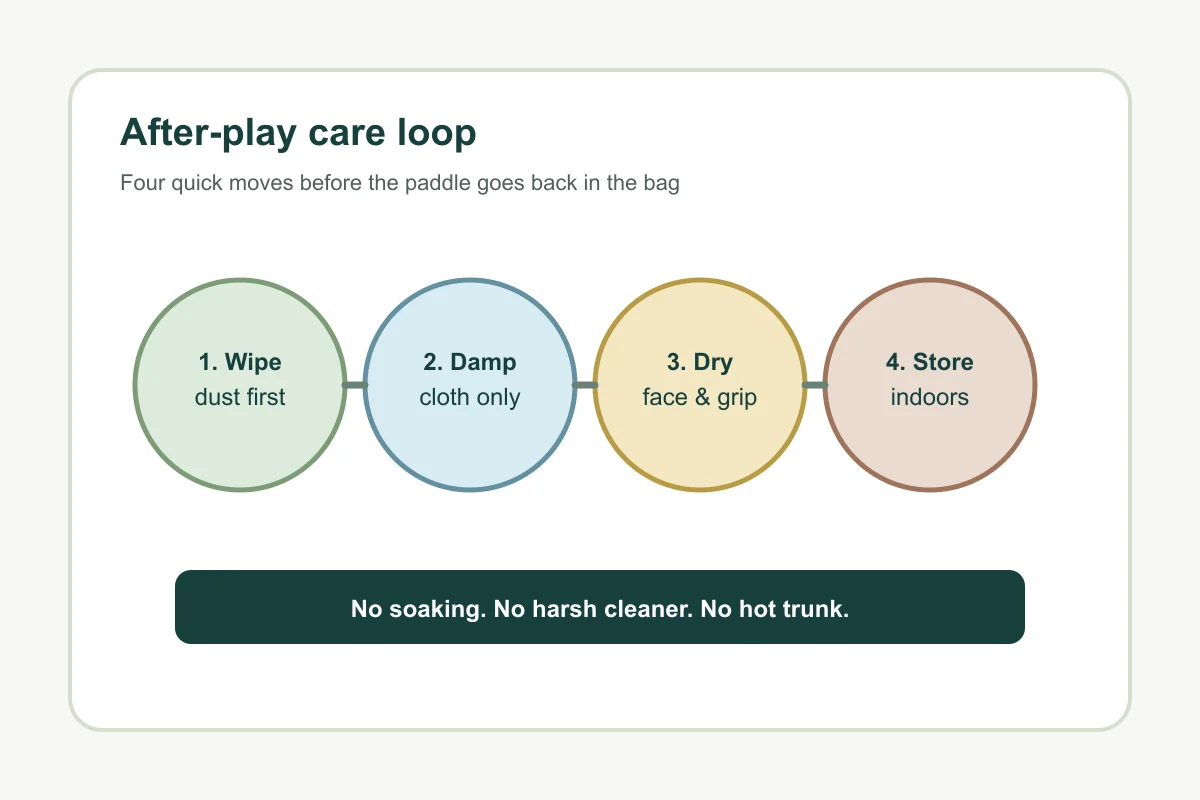
Estimated time: 10 minutes after play, plus drying time if the grip is damp.
- Brush off loose grit first. Use the dry side of a microfiber cloth before adding moisture. That keeps court dust from acting like sandpaper.
- Dampen, do not soak. Touch the cloth to clean water, wring it out, then wipe the paddle face with light pressure. Keep water away from gaps, chips, or lifted edge guard sections.
- Work from face to edge. Clean the hitting surface, then the edge guard, then the throat and handle. That order keeps handle sweat from being dragged across the face.
- Dry the paddle right away. Use a separate towel so no moisture sits near the core, edge guard, or grip.
- Air it out before covering. Give the grip a few minutes in open air before putting the paddle back in a sleeve or bag.
Raw carbon faces deserve a lighter touch. If your brand recommends a carbon fiber cleaning block, rub gently and stop once the visible ball dust is gone. Pressing harder does not create new grit.
Clean the Face Without Wearing Down the Texture
Estimated time: 2 to 4 minutes.
- Check the face material. Graphite, fiberglass, carbon fiber, and raw carbon faces do not all respond the same way to friction. If you are unsure, start with the gentlest method.
- Use water and microfiber for most paddles. A lightly damp cloth is enough for routine ball dust and court grime.
- Reserve cleaning blocks for raw carbon. Use them only when they match the manufacturer's care advice, and keep the motion light.
- Avoid scraping the sweet spot. Fingernails, hard plastic, and abrasive pads can polish or roughen the surface in ways you did not intend.
Surface texture matters because it affects how the ball leaves the paddle. For more buying context, compare carbon fiber or fiberglass paddle faces and read how paddle surface grit changes control and spin.
Protect the Grip, Edge Guard, and Core
Estimated time: 3 to 5 minutes.
- Wipe the handle after each session. Sweat and sunscreen build up fast, especially in summer play.
- Replace overgrip before it turns slick. A cheap grip change is better than squeezing harder and changing your stroke.
- Inspect the edge guard. Look for lifting, cracks, or soft spots where water and dirt can get in.
- Do not store weight on top of the paddle. A loaded trunk, crowded gear bin, or heavy bag can stress the face and edge over time.
If the paddle suddenly feels head-heavy, dead in one corner, or noisy inside, compare that with our guide to how long pickleball paddles last. Normal wear is one thing. A changed sound or feel is a replacement clue.
Store It Between Games, Not Just After the Season
Estimated time: 1 minute after each session.
- Keep it indoors. Room-temperature storage is better than a hot trunk, freezing garage, or damp shed.
- Use a cover. A sleeve prevents scuffs from balls, keys, water bottles, and other paddles in the bag.
- Separate wet gear. Shoes, towels, and sweaty shirts should not sit against the paddle face or grip.
- Lay it flat or stand it safely. Avoid any spot where it can be stepped on, bent, or knocked off a bench.
Storage also matters if you are testing different specs. A paddle that has been baked in a car is not a fair comparison against a fresh model from a control paddle shortlist, a power paddle guide for beginners, or budget paddle picks under 100.
Know What Care Can and Cannot Fix
Estimated time: 5 minutes for a basic inspection.
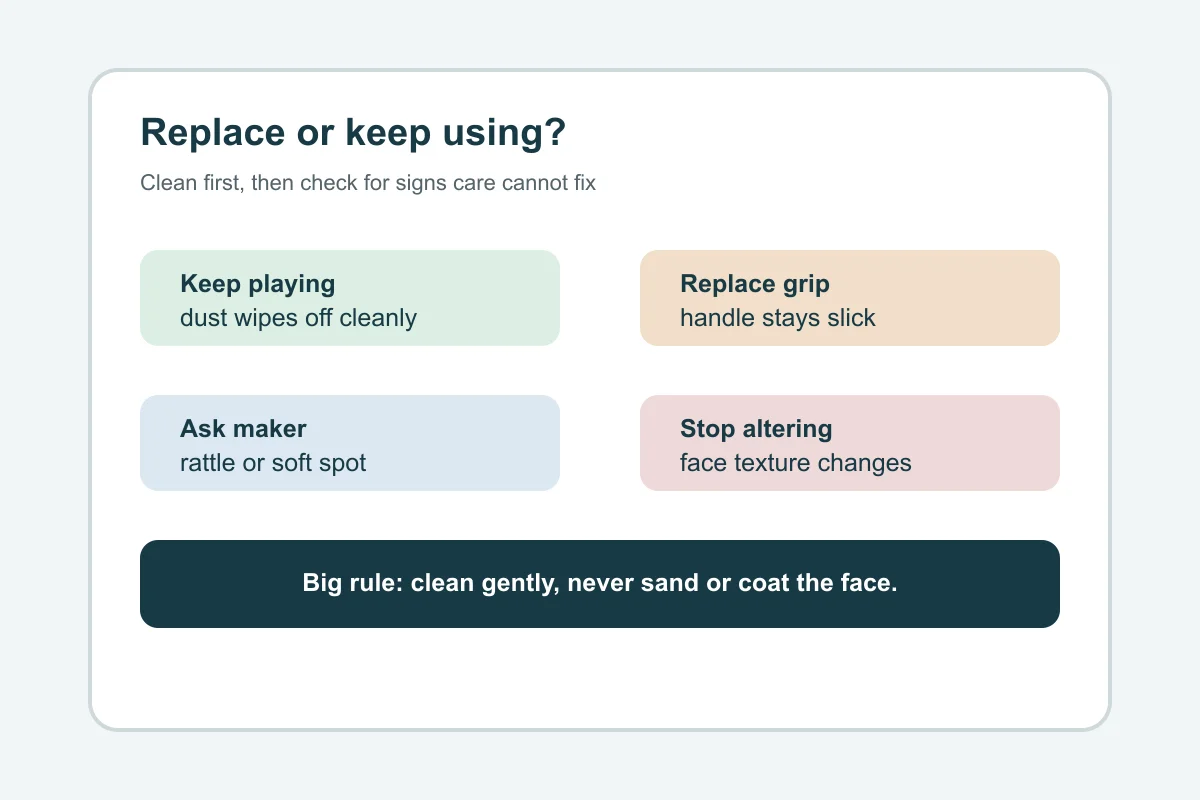
- Clean before judging performance. Dirt can make a good paddle feel tired.
- Check grip size and shape issues separately. A worn grip can feel like a paddle problem even when the face is fine.
- Watch for structural changes. Dead spots, rattles, loose edge guard sections, and delamination are not cleaning problems.
- Respect tournament rules. Grip wraps, edge tape, and some markings are usually normal, but face changes and texture-altering add-ons can become a rules issue.
Need to troubleshoot fit instead of care? Start with beginner paddle weight, the paddle shape guide, elongated or standard paddle shapes, and the guide to finding the right grip size.
Build Care Into Your Practice Routine
Estimated time: 30 seconds before play and 3 minutes after play.
- Start with dry hands and a dry grip. That keeps your first few points from feeling slippery.
- Check the face during water breaks. If it is dusty, wipe it before the next game instead of waiting until night.
- Use better footwork to protect the paddle. Late reaches and off-balance scrapes are rough on edge guards.
- Keep rules and drills nearby. Cleaner practice habits reduce rushed hits, paddle drops, and avoidable wear.
For the playing side, pair paddle care with warm up exercises, at-home beginner drills, control-building beginner drills, and beginner doubles positioning. If your court movement is the bigger issue, review court shoes versus tennis shoes.
Rules questions come up around paddle markings, serve changes, and beginner game flow too. Keep singles and doubles scoring, the double bounce rule, current serving rules, beginner serving routine, and common beginner mistakes handy while you build the habit.
Quick Checklist
- Wipe loose dust off before adding moisture.
- Use a lightly damp lint-free cloth for routine cleaning.
- Dry the face, edge guard, and grip before storing.
- Keep the paddle out of hot cars, freezing garages, and wet bags.
- Replace slick overgrip instead of squeezing harder.
- Use a paddle cover when it rides in a gear bag.
- Contact the manufacturer if you hear rattling or see delamination.
Official Care and Rules Sources
For manufacturer care advice, Selkirk recommends light cleaning with water and a lint-free cloth, avoiding household cleaners, keeping paddles away from extreme temperatures, and not submerging them. USA Pickleball's equipment standards explain why paddle surface, alterations, and approved equipment rules matter for sanctioned play.
Official sources: Selkirk Sport Paddle Care Guide · USA Pickleball Equipment Standards Manual.
Frequently Asked Questions
how do you clean a pickleball paddle?
Use a lint-free microfiber cloth with a small amount of clean water, wipe the face gently, then dry it right away. For raw carbon fiber paddles, use a carbon fiber cleaning block only when the paddle maker recommends it.
can you use soap on a pickleball paddle?
Skip soap for routine cleaning unless your paddle brand says otherwise. Soap and household cleaners can leave residue on the face, which may change the feel of contact.
should you clean a pickleball paddle after every game?
You do not need a full cleaning after every game, but a quick dry wipe after each session is smart. Clean more carefully when ball dust, sweat, or court grime is visible.
can a pickleball paddle get wet?
A little rain is not usually a disaster, but do not soak or submerge the paddle. Dry it promptly and avoid storing it wet, especially if the edge guard is chipped or loose.
how do I make my pickleball paddle last longer?
Clean it gently, dry the grip, store it indoors, use a cover, and stop scraping the edge guard on the court. Care will not reverse structural damage, but it can slow avoidable wear.
A paddle does not need a complicated maintenance ritual. Treat it like a textured piece of sports gear, not a dish to scrub, and you will keep the face cleaner, the grip safer, and the feel more predictable from one session to the next.