Paddles
Carbon Fiber or Fiberglass Pickleball Paddle: Which Face Fits Your Game?
Compare carbon fiber vs fiberglass pickleball paddle feel, power, control, spin, durability, and price before you choose your next paddle.
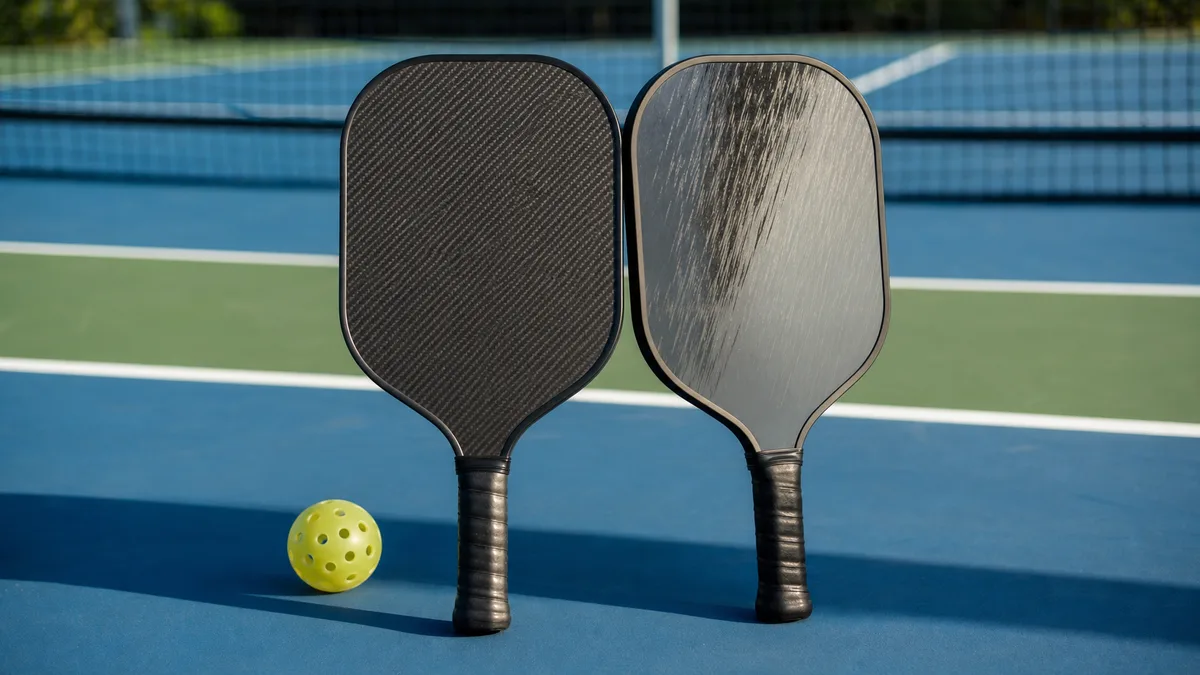
If you are comparing a carbon fiber vs fiberglass pickleball paddle, the real question is not which surface is “best.” It is which face gives you the kind of contact you can repeat under pressure.
Both materials can be legal, playable, and beginner-friendly when the full paddle design makes sense. Face material only tells part of the story, so read it alongside weight, grip size, shape, core thickness, and surface texture.
| What you see | Likely cause | First move |
|---|---|---|
| Balls sailing long | Too much pop or too heavy a swing path | Try a softer carbon face or thicker core |
| Drives feel weak | Face feels muted or paddle is too light | Test fiberglass or a slightly heavier paddle |
| Dinks bounce up | Contact is springy and hard to soften | Shorten the stroke and compare a control paddle |
| Spin feels inconsistent | Surface texture, wear, or technique varies | Check paddle grit and clean the face |
| Hand gets tired | Swing weight, grip size, or balance is off | Compare shape and grip before blaming the face |
Carbon fiber vs fiberglass pickleball paddle: the quick answer
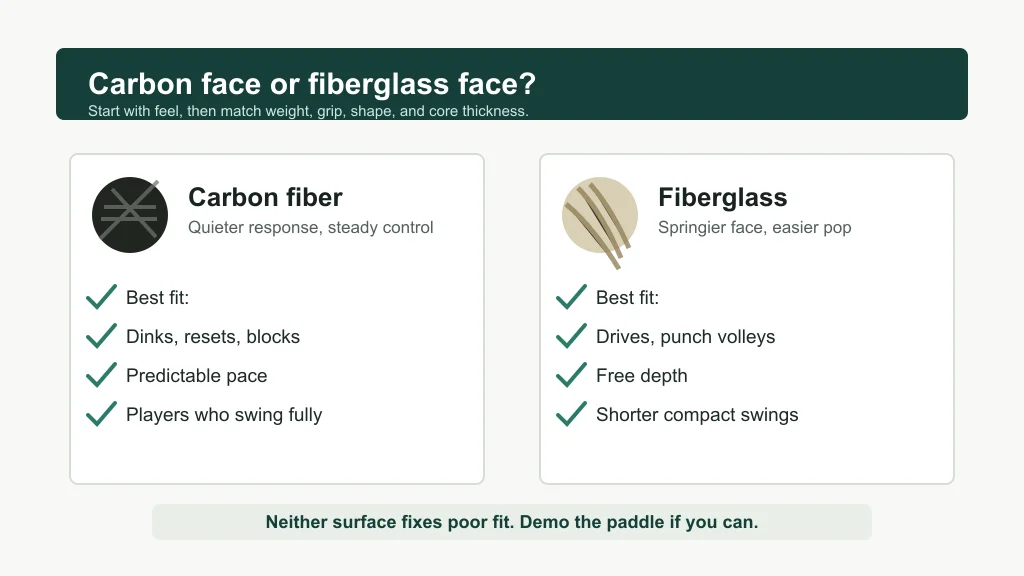
Choose carbon fiber if you want a steadier, more controlled response on drops, resets, blocks, and dinks. Choose fiberglass if you want easier depth, more lively contact, and a little extra help on drives or punch volleys.
That is the clean version. Real paddles are messier because brands combine face materials with different cores, edge foams, shapes, weights, textures, and handle lengths.
How carbon fiber usually feels on court
Carbon fiber faces tend to feel firmer and more predictable. Many players describe the contact as controlled because the ball does not jump off the face as dramatically on soft shots.
That makes carbon a strong match if you are learning to reset from the transition zone or trying to keep dinks lower over the kitchen. You still need clean technique, but the paddle is less likely to add surprise speed when your hand gets tight.
Control-focused buyers should also look at core thickness and shape. A 16 mm standard or hybrid shape often feels calmer than a thinner, elongated power build, which is why our best control pickleball paddles guide looks beyond the face label.
How fiberglass usually feels on court
Fiberglass is usually more flexible at impact, so the face can feel springier. For newer players, that extra pop can make it easier to get the ball deep without swinging hard.
Power has a tradeoff. If your touch is still developing, a lively fiberglass face can turn a cautious dink into a ball that sits up for the other team.
Players who struggle to create pace may still prefer that response. Before you buy only for pop, compare the advice in our power paddle guide for beginners and the budget paddle comparison, because lower-cost paddles often use fiberglass or composite faces.
Power, control, spin, and touch compared
Power usually favors fiberglass, at least when the rest of the paddle is similar. Control usually favors carbon fiber because the response feels more linear on shorter swings.
Spin is not that simple. Surface texture, manufacturing method, wear, ball contact, and stroke path matter more than the material name printed on the product page.
If spin is your main concern, study how paddle surface grit affects spin and control. A worn gritty face can lose bite no matter what material sits underneath.
Do not ignore weight, grip, and shape
Face material gets the attention, but fit decides whether the paddle behaves for you over a full game. A paddle that is too head-heavy can feel powerful for five minutes and tiring by the third match.
Start with weight. Our beginner paddle weight guide explains why many new players are better off in the middle range instead of chasing the lightest or heaviest option.
Then check handle comfort. A grip that is too large can slow your hands, while a grip that is too small may make you squeeze too hard, so use the grip size guide before judging the face material.
Shape changes the feel too. A widebody paddle usually gives you more forgiveness, while an elongated paddle can add reach and a different swing feel. The paddle shape guide and our elongated versus standard paddle comparison cover that decision in more detail.
Who should choose each paddle face?
Pick carbon fiber if you like controlled rallies, soft resets, patient dinking, and a paddle that rewards a full, confident swing. It is also a smart default if you are moving from beginner play into more doubles strategy.
Pick fiberglass if you want easier pop, especially on compact swings. It can help if you often leave drives short or need more depth from the baseline.
Match the face to your actual game, not the version of your game you wish you had. For doubles players, our beginner doubles strategy guide, double bounce rule explainer, and singles and doubles scoring guide can also shape what you should value in a paddle.
How to test before you buy
Demoing is better than guessing. Hit the same five shots with each paddle: serve, return, third-shot drop, dink, and punch volley.
Watch your misses. A carbon paddle that lands more balls in the kitchen may be better for you than a fiberglass paddle that feels exciting for two winners and launches the next three balls long.
Build a simple routine around the comparison. Use our beginner serving routine, at-home drill plan, and beginner control drills to test whether the paddle improves repeatable contact.
Care, wear, and replacement signs
Paddle faces wear down. Texture can smooth out, edges can loosen, and the paddle may start feeling dull or inconsistent.
Do not replace a paddle just because a new material trend appears. Replace it when performance changes in a way you can feel and confirm, especially if the same shots suddenly behave differently.
For timing, see how long pickleball paddles usually last. Good care matters more than the face label once the paddle is in your bag.
Gear choices around the paddle
A paddle does not work alone. Court shoes, warmups, and basic footwork change how early you arrive to the ball, and early contact makes any paddle feel better.
If you are still building your setup, compare pickleball court shoes versus tennis shoes and use the beginner warmup routine before judging your gear from cold first-game mistakes.
Rules knowledge helps too. Keep current serving rules and beginner scoring rules nearby, because some paddle complaints are really serve, position, or scoring confusion showing up as rushed contact.
And if your early games feel chaotic, this list of common beginner mistakes will help you separate gear problems from habits you can fix for free.
Quick Checklist
- Choose carbon fiber first if control, resets, and soft-game consistency matter most.
- Choose fiberglass first if you need easier depth and a livelier response.
- Compare weight, grip size, shape, and core thickness before blaming the face material.
- Test the same shots with each paddle so the comparison is fair.
- Check surface texture if spin is part of your buying decision.
- Pick the paddle that reduces your misses, not the one that feels flashiest for one rally.
- Confirm the paddle is approved for the type of play or events you plan to enter.
Carbon fiber and fiberglass both make sense in the right paddle. Start with the feel you need most, verify the fit specs, then choose the paddle that keeps more balls playable when your timing is not perfect.
Frequently Asked Questions
Is carbon fiber better than fiberglass for pickleball paddles?
Carbon fiber is not automatically better. It usually feels more controlled and predictable, while fiberglass often feels livelier and easier for power. Better depends on your swing, touch, and miss pattern.
Do fiberglass pickleball paddles have more power?
Often, yes. Fiberglass faces commonly feel springier, which can add pop on drives and volleys. Core thickness, weight, and shape still matter, so do not judge power by face material alone.
Are carbon fiber pickleball paddles good for beginners?
Yes, many beginners do well with carbon fiber because the response can feel easier to control. A forgiving shape, comfortable grip, and manageable weight matter just as much.
Which pickleball paddle material is best for control?
Carbon fiber is usually the safer starting point for control, especially on dinks, drops, and resets. Look for a stable build rather than chasing the material name by itself.
How do I know if I need a power paddle or control paddle?
If your balls land short even with a clean swing, test more power. If your balls fly long or pop up in the kitchen, test more control. Your misses are the clue.
Official sources: USA Pickleball equipment standards · USA Pickleball rulebook. Check current program pages before applying.