Beginner Gear
A Beginner's Guide to Choosing the Right Pickleball Bag
Choose the best pickleball bag for beginners with a practical checklist for size, pockets, shoe storage, comfort, and court-day gear.
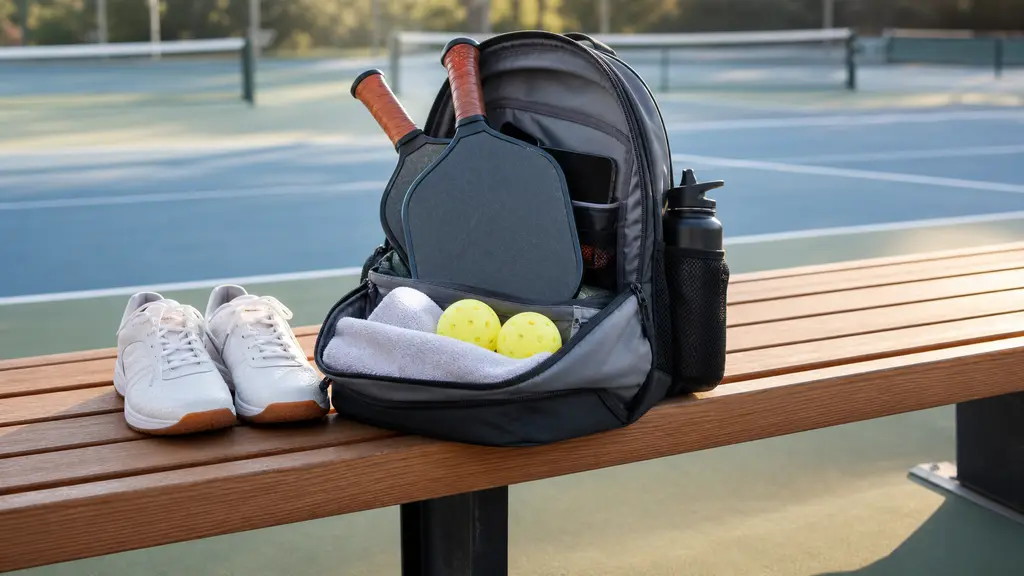
Shopping for the best pickleball bag for beginners gets easier once you stop thinking like a touring pro and start thinking about your actual court day. A good starter bag should protect your paddle, keep small items from disappearing, carry a water bottle without leaking into everything else, and still feel comfortable when you walk from the parking lot to the courts.
Most new players do not need a giant tour bag. They need a bag that fits a small, repeatable routine: paddle, balls, towel, water, phone, keys, maybe shoes, and enough extra space that nothing has to be jammed in sideways.
| What you see | Likely cause | First move |
|---|---|---|
| Paddles rub against keys or zippers | No padded paddle sleeve | Choose a backpack or sling with a dedicated paddle compartment |
| Your bag tips over beside the court | Soft base or uneven load | Look for a flatter base and pack heavier items low |
| Water bottle leaks into towels or grips | No outside bottle pocket | Prioritize an exterior bottle sleeve with elastic or a cinch |
| Everything smells after summer play | Shoes and damp towel share the main pocket | Use a vented pocket or a washable pouch |
| Shoulder gets tired before you play | Thin strap or overloaded sling | Move to a two-strap backpack if you carry shoes and extras |
Best pickleball bag for beginners: quick decision guide
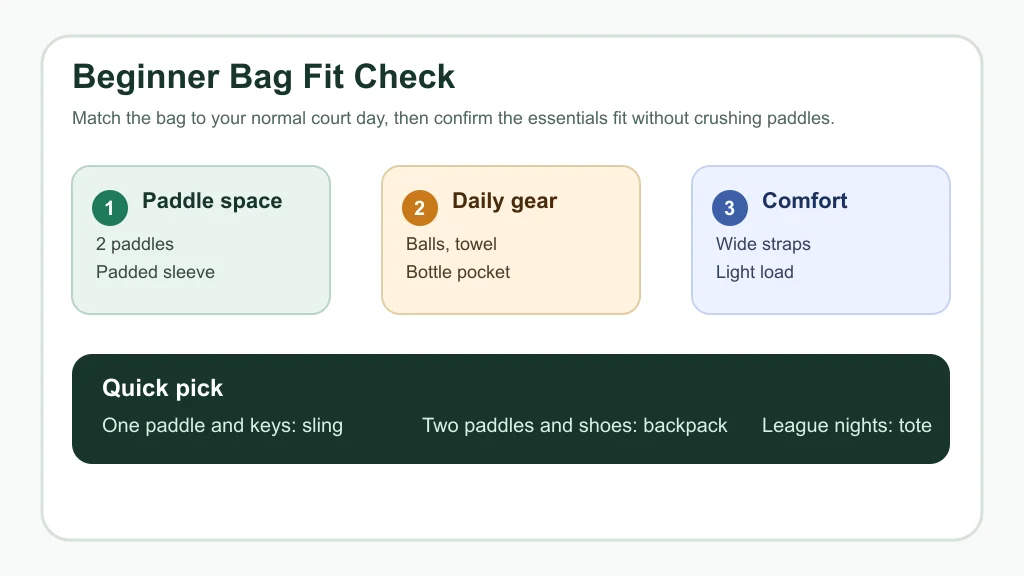
Start with the smallest bag that carries your normal kit cleanly. If you bring one paddle, two balls, a phone, keys, and a bottle, a sling can work. If you bring court shoes, spare socks, sunscreen, snacks, and two paddles, a backpack is the safer first buy.
Large duffels and tour bags make sense when you play leagues, rotate several paddles, or share gear with a partner. For a first bag, though, extra space can turn into clutter fast. I would rather see a beginner buy a tidy backpack than a huge bag that hides the item they need between games.
Pick the bag style that matches your court routine
Sling bags
A sling is the lightest common option. It is easy to carry, usually cheaper, and fine for one paddle plus a few small items. The tradeoff is space. Once shoes, a big bottle, or a second paddle enter the picture, a sling can feel cramped.
Choose a sling if you play short sessions, keep shoes on your feet, and do not carry much beyond the basics. Skip it if you dislike one-shoulder weight or already know you will bring layers and extra accessories.
Backpacks
A pickleball backpack is the most forgiving beginner choice. Two shoulder straps spread the load, the shape usually stands better on a bench, and the pocket layout tends to be easier to live with than a narrow sling.
Look for a padded paddle sleeve, an outside bottle pocket, a small valuables pocket, and a main compartment wide enough for a towel and balls. A shoe pocket is useful, but only if it does not steal all the main storage space.
Totes and duffels
Totes and small duffels can be great for players who want open access. You can see everything at once, which is handy during round robin nights or clinics. The downside is protection. Paddles can slide around unless the bag has dividers or sleeves.
Pick this style if you value access over compact carry. If you walk a long distance to the court, a backpack will usually feel better.
Features that matter more than brand hype
Beginner bags get marketed with a lot of pocket counts and lifestyle language. Ignore most of that at first. You are buying a small gear system, not a status symbol.
- Padded paddle storage: Your paddle face and edge guard should not scrape against keys, metal bottles, or gritty shoes.
- Outside bottle pocket: Water belongs outside the main compartment, especially if you carry overgrips, towels, or electronics.
- Easy valuables pocket: A top or front pocket saves you from digging for keys between games.
- Ventilation: Damp towels and shoes need airflow or separation. A mesh pocket or washable pouch helps.
- Stable base: A bag that falls over beside the fence is annoying and gets dirty faster.
- Comfortable straps: Thin straps are fine for a light sling, but a loaded backpack needs padding.
What size should a first pickleball bag be?
Most beginners are happiest with a medium backpack or compact tote. Think in terms of real capacity, not product names. A bag should hold two paddles, three to six balls, a towel, a full bottle, phone, keys, wallet, and a light layer without straining the zipper.
If shoes travel in the bag, size up. Court shoes are bulky, and forcing them into the same pocket as a paddle is one of the quickest ways to scuff gear and make the bag smell. For shoe storage, look for a separate compartment or plan to use a breathable shoe pouch.
Going too small creates daily frustration. Going too large invites you to carry half your closet. The sweet spot is enough space for your normal kit plus one extra layer.
How to pack it so gear lasts longer
Pack your paddle first, in the sleeve or against the flattest protected side. Balls can sit in the main compartment or a mesh pocket, but keep them away from anything sharp. Grips, tape, and small accessories belong in a pouch or zip pocket, not loose at the bottom.
Keep damp items away from your paddle handle. Sweat-soaked towels and wet shoes can shorten the life of grips and make the whole bag unpleasant. For paddle upkeep outside the bag, a simple paddle care routine helps more than most beginners realize.
Need a paddle setup before choosing bag space? Start with beginner paddle weight, then compare carbon fiber and fiberglass paddle faces, surface grit basics, and budget paddle comparison so you know what you are protecting.
Beginner packing list for rec play
Here is a practical starter loadout for casual open play or a first clinic. Adjust it once your routine settles.
- One primary paddle and, if possible, one backup paddle
- Three to six balls, with outdoor balls for outdoor courts
- Water bottle in an outside pocket
- Small towel and a dry grip or overgrip
- Phone, keys, wallet, and any court pass in a zip pocket
- Court shoes or a breathable shoe pouch if you change at the courts
- Sunscreen, cap, light layer, and a small snack for longer sessions
Ball choice matters too. If most of your play is outside, compare outdoor pickleball balls before filling the side pocket with random extras.
Small buying mistakes that make a bag annoying
Do not buy only from photos. Product pictures often show a perfectly packed bag, but they rarely show how it feels when the bottle is full, the towel is damp, and your shoes are stuffed inside after play.
Watch for tiny bottle sleeves, narrow paddle openings, and pockets that look clever but are hard to reach. A beginner bag should make the routine easier. If you have to unpack everything to find your keys, the design is working against you.
Honestly, the shoe compartment is the feature people overrate most. It is useful when well designed, but a bad one eats space and creates a lumpy carry. A breathable separate shoe pouch can be better than a cramped built-in tunnel.
How this bag choice connects to better play
Good organization will not fix your serve, but it does remove distractions. You show up with the right balls, a dry towel, and shoes that match the court. That makes warmups and rotation smoother.
Once your gear is sorted, spend more energy on habits that change points: serving routine, beginner doubles positioning, beginner doubles strategy, and at-home beginner drills. If you are still new to rules, keep singles and doubles scoring, the double bounce rule, and kitchen rules close by.
For paddle upgrades, compare control paddle traits, paddle traits for learning spin, the control paddle guide, power paddle tradeoffs, and when to replace a paddle. Shoes deserve the same attention, especially if you are deciding between court shoes vs tennis shoes.
Quick Checklist
- Choose a sling only if your court kit is truly minimal.
- Choose a backpack if you carry two paddles, shoes, or a larger water bottle.
- Confirm the paddle sleeve is padded and easy to access.
- Keep water outside the main compartment whenever possible.
- Separate damp towels and shoes from grips and electronics.
- Check strap comfort with the bag loaded, not empty.
- Leave one small pocket for keys, wallet, and phone every time.
Official sources: USA Pickleball equipment standards · USA Pickleball rulebook.
Final pick
For most new players, the right first bag is a medium pickleball backpack with a padded paddle sleeve, outside bottle pocket, comfortable straps, and enough room for shoes only if you actually carry them. Buy for your next ten court days, not for the player you might become a year from now.
After that, keep the routine simple. Pack the same pockets the same way, remove damp items when you get home, and you will spend less time searching through your bag and more time playing cleaner points. If you need a broader starting point, avoid the common beginner mistakes to avoid while your gear routine settles.
Frequently Asked Questions
what kind of bag is best for pickleball?
A medium backpack is the best all-around choice for most beginners because it balances storage, comfort, and paddle protection. A sling works for light carry, while a tote or duffel fits players who want fast access or bring extra gear.
can I use a tennis bag for pickleball?
Yes, you can use a tennis bag if it holds your paddles securely and has pockets that fit your court routine. Pickleball paddles are shorter than tennis racquets, so some tennis bags feel bigger than necessary.
how many paddles fit in a pickleball bag?
Small slings often fit one or two paddles. Beginner backpacks commonly fit two to four, depending on the sleeve design. Do not force paddles into a tight pocket where zippers or hard items press against the face.
do pickleball bags have shoe compartments?
Some do, especially backpacks and larger totes. A shoe compartment is helpful if it is vented and does not crowd the main pocket. If it feels cramped, a separate breathable shoe pouch may work better.
what should beginners keep in a pickleball bag?
Pack a paddle, a few balls, water, towel, phone, keys, wallet, spare grip, and any court-specific extras such as sunscreen or a light layer. Add shoes only if you change at the court.