Balls and Nets
Best Outdoor Pickleball Balls for Real Court Play in 2026
Find the best pickleball balls for outdoor play by durability, visibility, weather, approval status, and value before you buy.
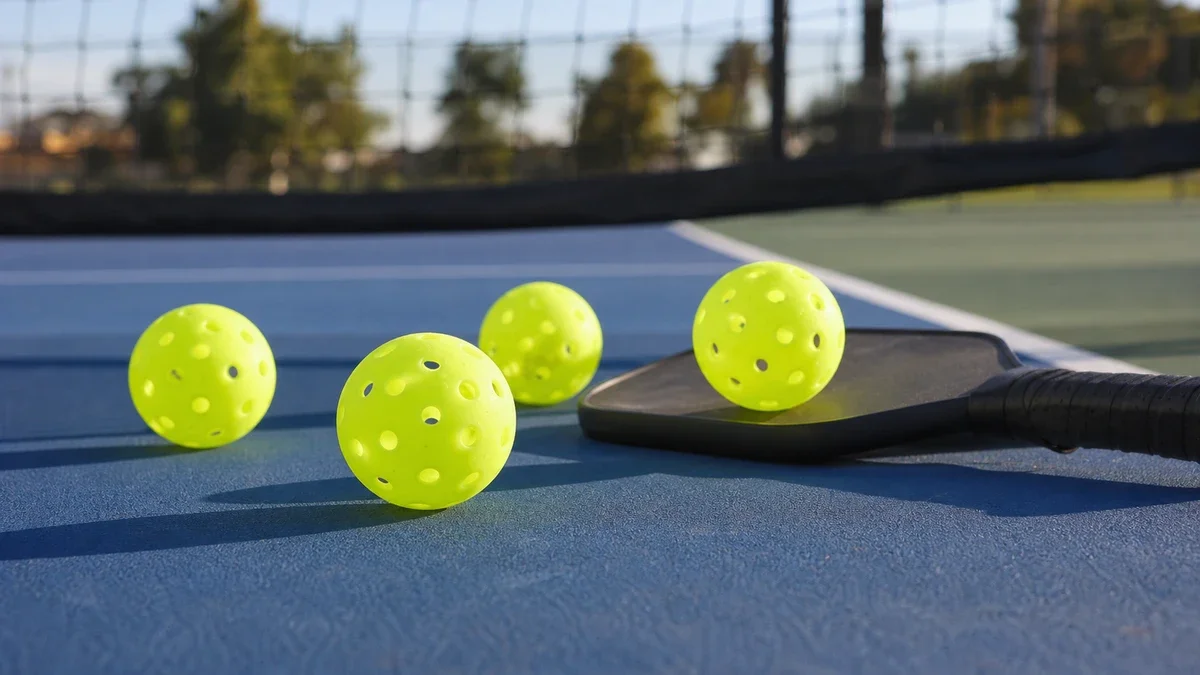
If you want the best pickleball balls for outdoor play, start with the court first, not the brand hype. Outdoor balls need to handle rougher hard-court surfaces, wind, heat, cooler mornings, and repeated paddle impacts without turning into wobbly practice balls after one session.
Good outdoor balls feel firm, fly predictably, and stay visible in glare. Great ones also match your group: casual rec games, drilling, league play, or tournament-style practice.
| What you see | Likely cause | First move |
|---|---|---|
| The ball skids and feels too fast | Hard ball, slick court, or cool weather | Warm up longer and compare a slightly softer model |
| Shots wobble in the air | Warped ball or uneven wear | Roll it on a flat surface and replace it if it hops |
| The ball cracks quickly | Cold temperatures or very hard impacts | Keep extras ready and avoid using brittle old balls |
| Players lose sight of it | Color blends with court, sun, or fencing | Switch to a brighter high-contrast color |
| Beginners struggle to rally | The ball plays too hard or fast for the group | Choose consistency over tournament speed |
Best pickleball balls for outdoor play: what matters most
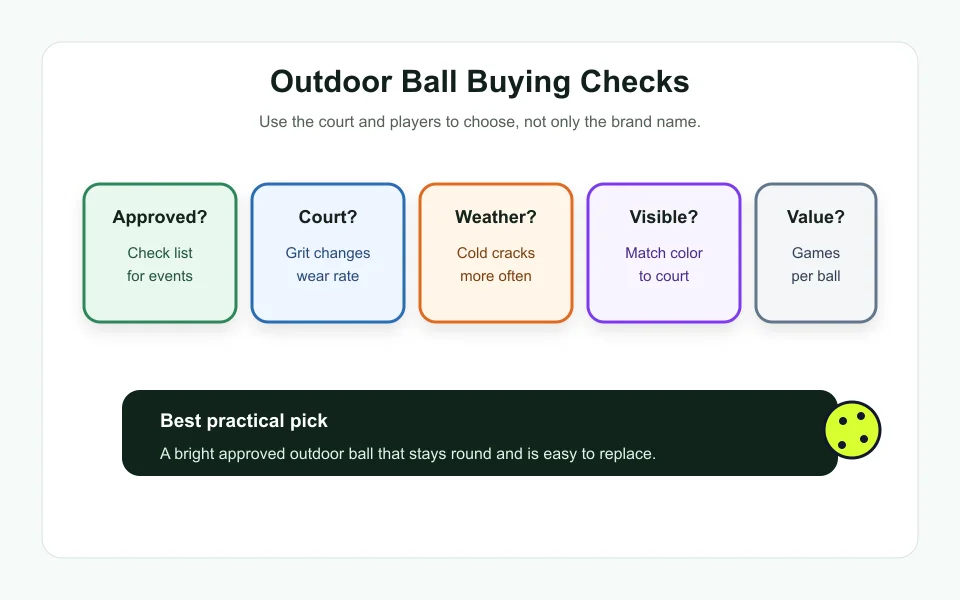
Pick a ball by feel, durability, visibility, and approval status. A famous model can still be the wrong fit if your group plays in cold weather, on gritty public courts, or with newer players who need a steadier bounce.
Most outdoor balls use smaller, more numerous holes than many indoor balls. That helps them cut through wind better and survive abrasive courts, but it can also make them feel firmer off the paddle.
Quick picks by player type
For most recreational outdoor groups, start with a durable, bright, USA Pickleball-approved outdoor ball from a widely available brand. Franklin X-40, ONIX Dura Fast 40, CORE Outdoor, Selkirk Pro S1, and similar approved outdoor models are common reference points because players can buy replacements easily and compare notes with other groups.
For drilling, prioritize consistency and cost per ball. A slightly less premium ball that stays round through basket work can be a better buy than a faster ball you hate replacing.
For tournament prep, use the ball your league or event names whenever possible. Ball speed, bounce, and feel change timing enough that practicing with a different model can make the first few games feel off.
How outdoor balls differ from indoor balls
Outdoor balls are usually firmer and built for wind, sun, and rougher court texture. Indoor balls often feel softer and may have larger holes, which can make them easier to control in gyms but less predictable outside.
USA Pickleball's rulebook notes that all approved balls are acceptable for indoor or outdoor play, while also showing that larger-hole balls are customarily indoor and smaller-hole balls are customarily outdoor. In plain English, approval tells you the ball passed standards; the court still tells you whether it feels right.
Need a rules refresher while you are sorting gear? Pair ball choice with the double bounce rule, kitchen rules, and singles and doubles scoring so newer players are not learning equipment and rules at the same time.
Durability, weather, and court surface
Cold weather is rough on outdoor balls. Plastic gets less forgiving, hard shots hit louder, and cracks show up faster, especially on older balls that already have small stress marks.
Hot weather creates a different problem. Some balls can feel livelier, softer, or slightly different after sitting in a car or baking on court. Keep them shaded when you can and rotate balls during longer sessions.
Public outdoor courts also vary. A fresh, gritty surface chews through balls faster than a smoother dedicated court, so judge value by how many playable games you get, not just the sticker price.
Visibility matters more than people admit
Bright neon yellow is popular because it works on many blue, green, and gray courts. Orange can be better in some lighting, but it can disappear against warm-toned backgrounds or certain court colors.
Ask the players who miss the ball most often. If older players, beginners, or anyone facing low sun keeps losing it, a color switch may help more than buying the fastest tournament-style ball.
Visibility also changes with sunglasses, shadows, fencing, and late-afternoon glare. That is why one group can swear by a ball while another group hates the same model on a different court.
Match the ball to your paddle and practice plan
A harder outdoor ball can make a powerful paddle feel jumpy. A softer-feeling ball may give beginners a little more time, especially when they are still learning depth control and resets.
If your whole setup is new, compare ball feel alongside paddle weight, budget paddle picks, control paddle picks, and power paddles for newer players. The ball is only one part of the contact feel.
Spin-minded players should also look at beginner spin paddle traits, surface grit and spin, and the difference between carbon fiber and fiberglass paddle faces. Ball pace and paddle face can change how aggressive your shots feel.
When to replace an outdoor ball
Replace a ball when it cracks, loses roundness, bounces oddly, or starts sounding dull compared with the rest of the sleeve. Do not wait until it ruins a rally every few points.
A quick roll test works well. Roll the ball across a flat court or table. If it wobbles, hops, or curves without a reason, move it to warm-up use or toss it.
Keep a few "game balls" separate from drill balls. Drill balls can be older, but match play deserves the roundest and most consistent ones in your bag.
Buying checklist for outdoor pickleball balls
- Approval: Check the USA Pickleball approved ball list if you play organized events.
- Ball type: Choose a model listed or marketed for outdoor use, especially on hard courts.
- Color: Pick the color that stands out on your actual court.
- Weather: Expect more cracking in cooler temperatures and keep extras on hand.
- Feel: Choose a ball your group can rally with, not only the fastest option.
- Availability: Favor balls you can replace easily so every session feels consistent.
- Value: Judge cost by playable games per ball, not just price per sleeve.
Useful gear and training next steps
Outdoor balls expose movement habits quickly because they can play firm and fast. Use a short warm-up routine, clean up beginner mistakes, build control with at-home drills, and steady the first shot with a serving routine.
Doubles players should connect ball choice to court habits too. Better doubles positioning basics and beginner doubles strategy make any ball feel less frantic.
For gear maintenance, keep balls out of extreme heat when possible and give your paddle the same care. These paddle care habits, notes on how long paddles usually last, and control paddles that former tennis players tend to like can help you build a steadier setup.
Footwork matters with a fast outdoor ball. If you slide, stumble, or feel late to the kitchen, compare court shoes versus tennis shoes before blaming the ball.
Quick Checklist
- Start with an approved outdoor ball if you play leagues or tournaments.
- Test one sleeve before buying bulk.
- Choose the color that your group sees best on your court.
- Keep separate game balls and drill balls.
- Roll-test balls that start flying oddly.
- Rotate extras in cold weather because cracks happen faster.
- Practice with the same ball your event or regular group uses.
Bottom line
The right outdoor ball is the one your group can see, trust, and replace without drama. For most players, that means a bright, approved outdoor model that stays round, holds up on your court surface, and feels consistent through full games.
Chasing the hardest or fastest ball is not always the win. Better rallies usually come from a ball that suits the court, the weather, and the people actually playing.
Official sources checked: USA Pickleball approved ball list and USA Pickleball Official Rulebook.
Frequently Asked Questions
what pickleball balls are best for outdoor courts?
Most outdoor players should start with a bright, durable, USA Pickleball-approved outdoor ball that is easy to replace. The best choice depends on your court texture, weather, and how fast your group wants the ball to play.
are indoor and outdoor pickleball balls different?
Yes. Outdoor balls are usually firmer and designed for wind and abrasive court surfaces. Indoor balls often feel softer and may use larger holes, which can make them less predictable outside.
how long do outdoor pickleball balls last?
It depends on temperature, court surface, and shot pace. A ball can last several sessions in mild weather, or crack much faster in cold conditions or heavy drilling.
what color pickleball is easiest to see outside?
Neon yellow works well on many outdoor courts, but orange can be better for some players and backgrounds. Test visibility on your actual court before buying a large pack.
do outdoor pickleball balls crack in cold weather?
They can. Cooler temperatures make plastic less forgiving, so outdoor balls are more likely to crack during cold morning or winter play.