Shoes
Supportive Pickleball Shoes That Keep Heels Happier on Court
Find supportive pickleball shoes for heel comfort with court-stable traction, heel cushioning, arch support, and fit checks before you buy.
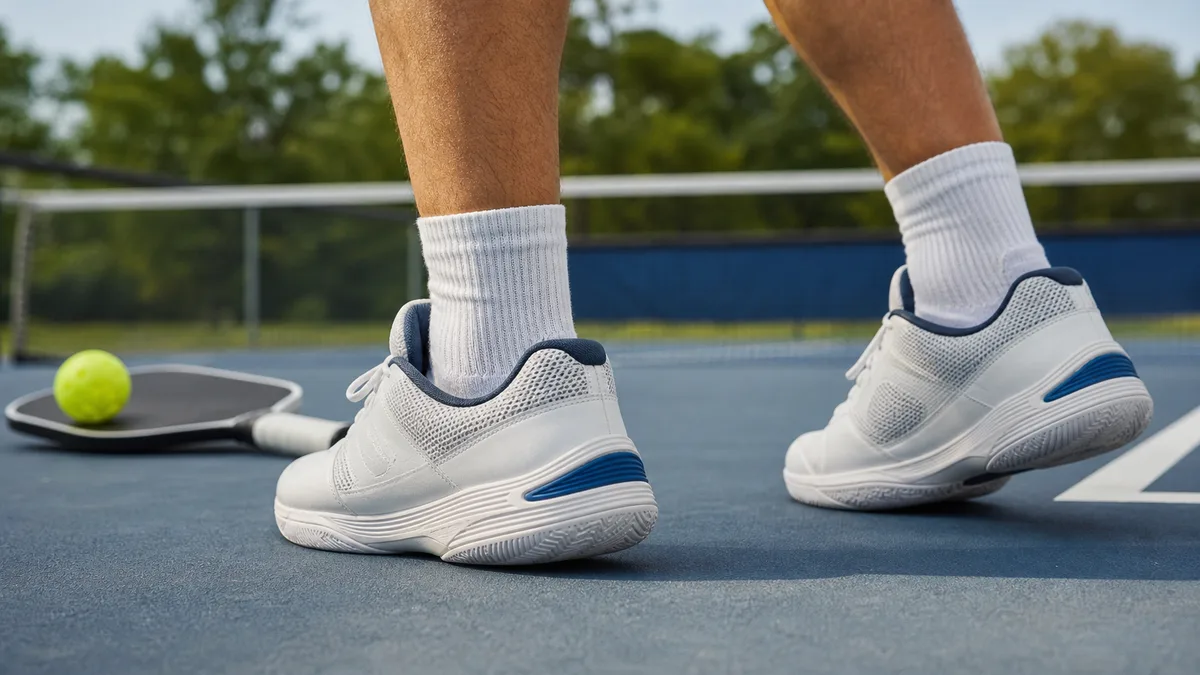
If you are shopping for supportive pickleball shoes for heel comfort, start with court stability before you chase plush cushioning. A soft heel can feel nice in the aisle, but pickleball asks your shoes to brake, shuffle, pivot, and hold your foot in place on a hard court.
Heel comfort is not a medical diagnosis. Think of this as a practical gear filter for recreational play, especially if your heels feel beaten up after games or your current shoes slide around during lateral moves.
| What you see | Likely cause | First move |
|---|---|---|
| Heel feels bruised after games | Thin heel cushioning or a tired midsole | Try a court shoe with firmer shock absorption and a deeper heel cup |
| Heel slips when you split step | Loose heel shape or poor lockdown | Use the extra eyelet, adjust lacing, or test a narrower heel fit |
| Arch and heel ache together | Midfoot support may not match your foot | Test a supportive insole only after confirming shoe length and width |
| Shoe rolls outward on wide steps | Running-shoe platform or weak sidewall | Move to a tennis or pickleball court shoe with lateral support |
| Toe box feels fine, heel rubs | Heel counter shape does not match your foot | Try another last instead of sizing up blindly |
How to choose supportive pickleball shoes for heel comfort
Pickleball shoes should feel stable first and cushioned second. That order matters because a shoe that compresses too much can let your heel wobble, which makes every stop and push-off feel less controlled.
Start with the heel counter, the structured back part of the shoe. Press it with your thumb. A good court shoe usually resists folding, then wraps the heel without biting into the Achilles area.
Next, look at the midsole. You want enough cushioning to soften repeated hard-court impacts, but not so much stack height that the shoe feels tippy when you move sideways.
Running shoes feel comfortable, but court shoes solve a different problem
Running shoes are built mostly for straight-line motion. Pickleball is full of short shuffles, recovery steps, kitchen-line stops, and awkward half-pivots after a ball clips the tape.
That is why a very soft running shoe can backfire on court. It may cushion the heel, yet still let your foot drift over the edge of the platform when you move laterally.
A better pickleball option usually looks more like a tennis shoe: wider base, tougher outsole, reinforced sidewall, and a heel that stays seated when you push sideways.
The heel features that matter most
Skip vague words like “cloud” or “max comfort” until you have checked the actual structure. For heel comfort, the shoe should hold the rearfoot, absorb impact, and stay predictable during quick changes of direction.
- Deep heel cup: helps the heel sit down into the shoe instead of skating around on top of the insole.
- Firm heel counter: gives the back of the shoe enough shape to resist twisting and collapse.
- Moderate cushioning: softens hard-court impact without making the shoe unstable.
- Stable outsole: provides grip and a broad base for side steps, not just forward walking.
- Roomy forefoot: lets toes spread during stops so your heel does not do all the work.
- Non-marking sole: keeps indoor and club courts protected, which is also required in official rule contexts.
Honestly, most shoe pages talk about cushion before they talk about lockdown. For pickleball, that is backwards. A heel that stays put is often the difference between “comfortable enough” and “I need to sit down after two games.”
Fit checks to do before you keep the shoes
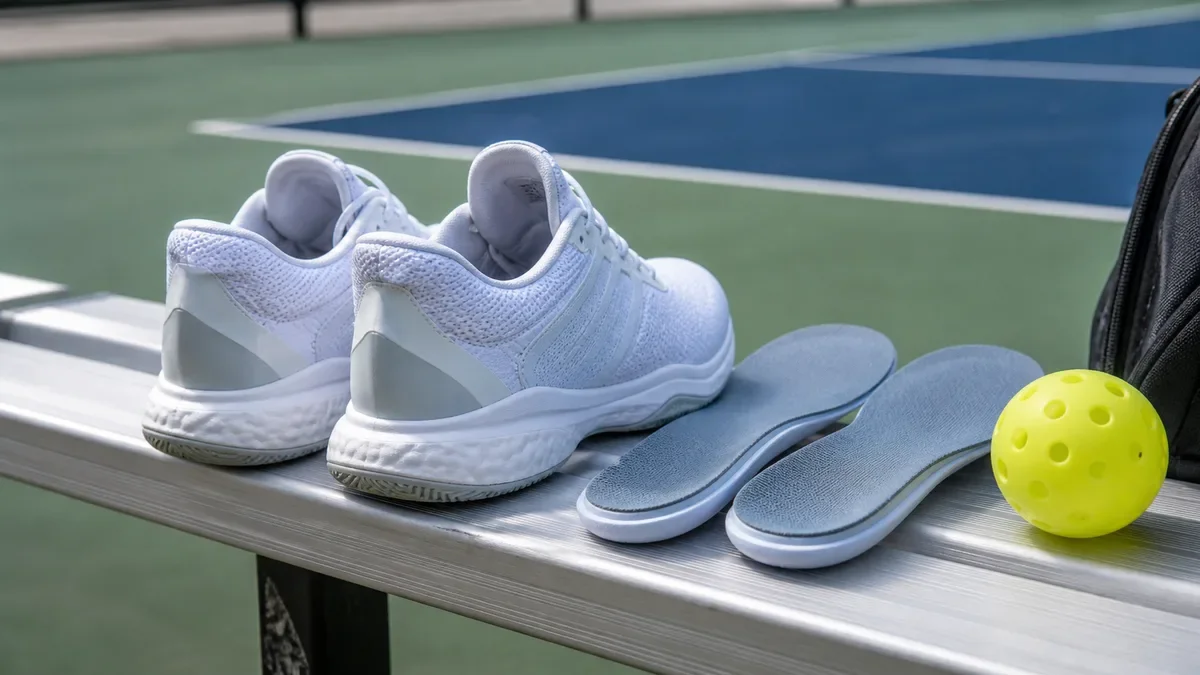
Try shoes late in the day or after a walk, when your feet are closer to game-day size. Wear the socks you normally use for pickleball, then lace both shoes fully before judging anything.
Do three small tests indoors on a clean floor. First, walk briskly and notice heel lift. Second, shuffle side to side and listen for slipping. Third, make two gentle split steps and see whether the heel lands centered.
Leave about a thumb's width in front of the longest toe, but do not solve heel slip by sizing down until your toes jam. If the heel is loose and the toe box is right, the shoe shape is the problem.
When insoles help, and when they hide a bad shoe
An insole can be useful when the shoe already fits and moves well, but the arch shape or heel cup feels too flat. It should improve contact under the foot without lifting your heel so high that the shoe rubs.
Start slowly. Wear the insole around the house, then for a short hit, then for a full session. A sudden switch can change pressure under the arch, calf, and heel.
Do not use an insole to rescue a shoe with a sloppy heel, narrow toe box, or unstable sidewall. That usually turns one fit issue into two.
Match the shoe to how and where you play
Outdoor hard courts usually reward durability and stable cushioning. Indoor gym floors may call for a grippy non-marking outsole that does not feel sticky during pivots.
Recreational doubles players who stay near the kitchen still need lateral support, especially when reaching for dinks and resetting position. If you are still building your setup, pair your footwear choice with the rest of your first-court kit, from a beginner pickleball set to a practical pickleball bag that keeps shoes separate from paddles and balls.
Footwork also matters. Cleaner movement lowers the amount of panic braking your shoes have to absorb, so beginner players should work on doubles positioning, basic doubles strategy, and a few at-home pickleball drills.
Related gear checks before your next match
Shoes are only one part of comfort on court. A bad ball, poorly set net, or paddle that fights your swing can make you move late and load your heels harder than necessary.
- Check pickleball net height and setup before blaming your footwork for awkward reaches.
- Use consistent outdoor pickleball balls so bounces are not forcing late steps.
- Pick a paddle that fits your control needs, including control paddles for tennis players if you are crossing over from tennis.
- Consider beginner spin-friendly paddle traits only after you can move comfortably into position.
- Review kitchen rules, singles and doubles scoring, and the double bounce rule so you are not rushing because of rule confusion.
- Keep your paddle in good shape with a paddle care routine, and understand whether carbon fiber or fiberglass fits your feel preference.
- If you are upgrading, compare control paddle picks, paddle weight, power paddle traits, paddle lifespan, and surface grit before buying.
- Clean up movement habits with common beginner mistake fixes before you assume the shoe is doing all the damage.
Quick Checklist
- Choose a tennis or pickleball court shoe before a soft running shoe.
- Press the heel counter and reject shoes that fold easily.
- Test heel lockdown with shuffles, split steps, and gentle pivots.
- Look for cushioning that feels protective, not unstable.
- Confirm the outsole is non-marking for indoor and club courts.
- Add insoles only after the shoe length, width, and heel shape are right.
- Stop playing and get medical advice if heel pain changes your gait or lingers off court.
Bottom line
Pick the shoe that keeps your heel centered, your base stable, and your landing controlled. Plush cushioning is nice, but on a pickleball court, the best heel comfort usually comes from a secure court shoe that lets you move without second-guessing every stop.
Frequently Asked Questions
what pickleball shoes are best for heel pain?
Look for court shoes with a secure heel counter, cushioned heel landing, stable sidewalls, and enough arch support for your foot shape. If heel pain is sharp, persistent, or changing how you walk, get medical advice before trying to play through it.
are running shoes ok for pickleball if my heels hurt?
Running shoes can feel soft under the heel, but many are built for forward motion, not quick side steps. A court shoe with heel cushioning and lateral stability is usually the better starting point for pickleball.
do pickleball shoes need arch support?
Many players do better with some arch support because it helps the shoe and foot work together instead of letting the midfoot collapse. The right amount depends on your foot, so comfort during side-to-side movement matters more than a generic label.
should I add insoles to pickleball shoes?
Insoles can help if the shoe fits well but lacks the heel cup or arch shape you need. Start with the original insole, then test a replacement gradually so you do not create new pressure points.
how should pickleball shoes fit around the heel?
Your heel should feel held without rubbing. If it lifts during a split step or slides during a shuffle, the shoe is either the wrong shape, the wrong size, or needs a different lacing pattern.
Official sources: AAOS OrthoInfo: Plantar Fasciitis and Bone Spurs · USA Pickleball Official Rulebook.